Tag Archives: fat

Should the Boy Scouts Add a “Weight Cycling” Badge?

Proposed (by me) "Weight Cycling" patch

Proposed (by me) “Weight Cycling” patch

In the wake of my previous blog post about BMI and the Boy Scouts of America (BSOA), I’ve been reading some responses.  And the responses I’ve been reading by various members and officials within the BSOA are troubling to say the very least.  Let me give you some examples:

1.  We haven’t turned anybody away because of BMI.  In an article found in the Cleveland Plain Dealer, Adult leader Ron Blasak states, “there was no one in the Greater Cleveland Council who was turned away because of a BMI issue.”  However, Blasak also admits that it’s possible “that someone read the requirements and shied away.”  To which I reply, hmmm.  Do you think so?  Do you think that plastering BMI requirements all over the marketing materials and saying they will be strictly enforced just might make a kid fear that he will be shamed and ridiculed at this shindig?  Do you find it surprising that your average 13-year-old might choose not to trap himself miles away from civilization with people who are convinced he can’t do anything?

2. We’re turning away kids with high BMI for their own good.  In that same article, Blasak also states, “Overweight boys would have a tough time getting around and probably wouldn’t have much fun.”  I have to wonder what evidence he is using to form this conclusion.  BMI is a simple calculation based on height and weight.  It doesn’t tell you anything about the fitness level of a potential participant.  A Scout with a BMI in the “ideal” range may be very unfit and may be at greater risk than a stouter scout who exercises more and has greater functional fitness.  Assuming that all the overweight kids will be miserable is just that, an assumption.  And we all know what happens when you ASSuME.

We’ve given the scouts plenty of time to get thin.  In many of the articles I’ve read, BSOA spokespeople are quick to  point out that they released these health requirements two years in advance of the Jamboree, which should give the scouts plenty of time to get fit and achieve an acceptable BMI.  In an article published by Fox News, BSOA spokesperson Deron Smith states:

“We published our height-weight requirements years in advance and many individuals began a health regimen to lose weight and attend the jamboree.  But, for those who couldn’t, most self-selected and chose not to apply.”

To which I say, “You got it half right, but 50 percent is still a failing grade.”  Over a two year period, it may be reasonable for a young person to make significant changes to their overall conditioning and fitness level.  We know how to do that.  What we don’t know how to do is make a fat kid into a thin kid–at least over the long term.  We can make a fat kid into a thin kid temporarily.  We might even get the timing right and make that fat kid thin at just the right moment to pass his physical and enjoy the Jamboree.  But when we look at the statistics for that kid staying thin over the long haul, the success rates are dismal.  So instead of teaching fat Scouts how to become thin scouts, we are teaching them the amazing, adult-level skill of weight cycling.  This is the process of losing weight, gaining it all back plus a little more, losing weight, gaining it all back plus a little more and so on and so on.  In fact, this process of BMI busting in order to make Jamboree weight seems ideally suited to the process of weight cycling.  That’s what led me to suggest that maybe the BSOA should just make a “weight cycling” badge and be done with it.  (Please see proposed badge design above.)

And what can I say about “self-selected and chose not to apply” other than “see point 1 of this blog”?  Yup, if you tell pudgy kids and chubby kids and fat kids that they are not welcome in enough ways, with enough 14 point bold print on your website, they will ultimately get the message, “Don’t bother to apply, because we don’t want you.”

But the real story is not in the rhetoric that is flying back and forth on the airwaves and in cyberspace.  The real story is the way that this policy will affect the lives of real kids.  Kids like the one referenced in this recent NAAFA press release:

One mother reported to NAAFA in 2009 that her son was having issues attending Philmont High Adventure Boy Scout Camp in Cimmaron, NM.  “Philmont has a weight standard and anyone over this standard is labeled unhealthy and cannot participate.  I tried to explain to them that my son plays football, wrestles and runs relays, shot put, discus thrower, in track & field and a weight lifter.  During the summer he swims, weightlifts and conditions for football. He has been conditioning for Philmont by hiking for 2-3 hours with a 50 pound pack on his back for the last 2 months.  He weighs 261 lbs. and has been eating a 1200 – 1400 calorie diet trying to lose weight.  Unfortunately he only lost 3 pounds… According to Philmont medical staff if he doesn’t weigh below 246, he will be sent home.  It didn’t matter to them if he is active, only his weight number.  I have watched my son condition for football and he can run circles around other players that are what society deems healthy.”

This is why this is such a big deal.  We have kids who really want to go, who have put in the long hours of training required to be physically prepared for the challenge, who are probably in far better physical condition than many of their younger counterparts who are told, “go home fatty.”  Given the rise in eating disorders among young men, I have a hard time understanding not only how this is considered reasonable, but also, how it can be considered responsible.

Maybe we need to help the BSOA along a little and propose some new HAES-friendly, body-positive awards.  Got any ideas?  I’d love to hear your proposals for new BSOA awards patches that are more likely to help young men accept and care for the bodies they already have and learn to feel comfortable in the skin they are in.  Feel free to post your ideas in the comments below!

Love,

The Fat Chick

Like my posts?  You’ll love my stuff!

Buy my book: The Fat Chick Works Out! (Fitness that is Fun and Feasible for Folks of All Ages, Shapes Sizes and Abilities)–available in softcover and e-book versions

Buy my DVD: The Fat Chick Works Out! (A Safe, Easy and Fun Workout for Klutzes, Wimps and Absolute Beginners!)

Buy a book or a DVD for a friend and save $5!  Just enter FRIENDBLFT in the discount code box!

Check out my Training Programs–both in person and via Skype (Starting at just $25!)

or

Book me to speak at your special event!

Boy Scouts, BMI and Managing Risk

Would the BSOA deem Russell “too fat” to go to camp?

Yesterday, I read Ragen Chastain’s amazing post on the new policies implemented by the Boy Scouts of America regarding participation in events and BMI.  In order for any Boy Scout to participate in a “high adventure” activity which includes a duration of over 72 hours and being over 30 minutes drive from emergency medical services, his parents and doctors must fill out a group of forms including Part C which has a whole lot of questions about BMI.  In fact questions about height and weight are the first things listed on the form before listing any pre-existing conditions or other information about disease or wellness.  Any scout with a BMI over 40 will be forbidden from participating in these high adventure activities (including the Jamboree).  And according to the site:

The Jamboree Medical Staff will review all applicants with a BMI of 32.0–39.9 and consider jamboree participation based on  1) health history, 2) submitted health data, and 3) recommendation of the applicant’s personal health care provider. For applicants with a BMI >31.9, a recommendation of “no contraindications for participation” by the applicant’s personal health care provider does not necessarily guarantee full jamboree participation. The jamboree medical staff will have final determination of full jamboree participation.

The Boy Scouts of America (BSOA) site, lists these reasons for the new restrictions:

“Anyone who is obese and has multiple risk factors for cardiovascular/cardiopulmonary disease would be at much greater risk of an acute cardiovascular/cardiopulmonary event imposed on them by the environmental stresses of the Summit. Our goal is to prevent any serious health-related event from occurring, and ensuring that all of our participants and staff are “physically strong.”

And frankly, all of this sent me scrambling for my manuals and training information about exercise in children.  One question I had right away was, “Are they using data for all-cause mortality in adults and extrapolating that information for children?”  Because, the data I’ve reviewed indicate that mortality among exercising children and teens comes from different sources that that of adults.

According to the Youth Sports Safety Alliance, the number one cause of death among exercising young athletes is Sudden Cardiac Arrest (SCA).  During my fitness certification training, I learned that the number one cause for SCA is a heart defect called hypertrophic cardiomyopathy, a thickening of the heart muscle.  Hypertrophic cardiomyopathy and other heart conditions likely to lead to SCA are often virtually undetectable from a standard physical exam.  This is why many schools are starting to recommend and a few are beginning to require a EKG for participation in strenuous school sports.  When SCA occurs, death often follows.  Being close to a hospital only helps so much as mortality risk increases by 10 percent for every minute it takes to get to medical care.  This is why there is a greater focus on CPR and Automatic External Defibrillators for helping to protect student athletes these days.

I am not aware of any research indicating that SCA is more frequent among overweight or obese young athletes.  I am also unaware of any efforts on the part of the BSOA to ask that participants in high adventure activities be screened for hypertrophic cardiomyopathy or be given an EKG as part of the Part C form.  Now, I understand that an EKG can be expensive to administer and read, but if the concern is really about the safety of the participants, it would seem that this is a more important test than BMI.

Another important risk for kids and strenuous exercise is heat stroke.  And there is some research that indicates that heat illness is more frequent among overweight and obese football players than “normal weight” players.  But many experts stress that exertional heat illness is 100 percent preventable.  Most experts strongly recommend an acclimation process to help get student athletes ready for physical exertion.  The super punishing, first day of practice workouts in full pads and gear is now frowned upon.  I wonder if the Jamboree and other “high adventure” scouting activities really do enough to help scouts of all sizes acclimate to higher temperatures and altitudes or if they simply assume that as long as the kids are skinny, they will be safe.

Which makes me wonder.  Where is the data?  Show me the data that BMI has a serious impact on safety for children and youth who wish to participate in strenuous physical activity.  Do not simply show me studies from adults and extrapolate down to kids.  And if the health and safety of your scouts is of primary importance, why are you not requiring adequate screening for the leading cause of death among young exercisers?  Are you building adequate acclimation days to make the camp safe for participants?  Or again, are  you assuming skinny = safe and healthy?  And why are you making your most important event so strenuous that you have to worry so much about health and safety in the first place?

To borrow from a famous phrase from the film Jerry Maguire, “Show me the data!”

Love,

TFC

Like my posts?  You’ll love my stuff!

Buy my book: The Fat Chick Works Out! (Fitness that is Fun and Feasible for Folks of All Ages, Shapes Sizes and Abilities)–available in softcover and e-book versions

Buy my DVD: The Fat Chick Works Out! (A Safe, Easy and Fun Workout for Klutzes, Wimps and Absolute Beginners!)

Buy a book or a DVD for a friend and save $5!  Just enter FRIENDBLFT in the discount code box!

Check out my Training Programs–both in person and via Skype (Starting at just $25!)

or

Book me to speak at your special event!

Workplace Wellness Doesn’t Heal the Bottom Line

workplace_wellness copyI think we’ve seen lots and lots of press of late concerning workplace wellness.  There are a variety of companies charging huge premiums to corporations promising companies healthier employees.  And each of these companies, in turn, promises a healthier balance sheet by reducing worker healthcare costs.  A lot of c-level employees have spent a fair amount of company cash on these promises.  So it’s probably not surprising that when Rand Corporation issued its recent report concerning the effectiveness of workplace wellness programs there was a scramble.

Rand Corporation briefly posted the government-mandated report on its site last Friday.  Very shortly after it was posted, it was withdrawn.  The following statement was posted in its stead:

“This document was posted in error and has been withdrawn pending completion of contractual obligations to the project sponsor.”

Before the document was pulled, Forbes magazine managed to snag a copy.  Forbes didn’t waste any time posting an article about the findings of the report.  I’ll summarize the report for you here.

Most workplace wellness programs don’t work.

Yup, you heard it.  It seems that most of the millions and even billions of dollars of corporate cash being dumped into workplace wellness programs that don’t offer any statistically significant benefit.  In short:

1.  Most workplace wellness programs don’t lead to better health among employees.

2.  Most workplace wellness programs don’t lead to statistically significant weight loss in employees.  On average attendees of the wellness programs lost 1 pound per year for three years.  Even those few programs that showed larger weight loss numbers,  were not able to sustain the benefits.

3.  Most workplace wellness programs don’t lead to better behavior.  Even smoking cessation programs generally led only to “short term” improvements.

4.  Most workplace wellness programs don’t lead to better health markers.  There were no statistically significant improvements in blood pressure, cholesterol, or blood sugar.

5.  Most workplace wellness programs were unable to demonstrate lower costs for hospital or emergency care.

The bottom line is that, as a whole, the workplace wellness programs cost the companies money and did not create statistically significant cost savings.  In fact, on average, cost savings averaged $2.38/month for year one and $3.46/month for year three.

Not long after Forbes published its article, it seems that the cat was well and truly out of the bag.  And the Rand Corporation published the report.  You can see the full PDF here.

All of this is especially relevant to us fat folk.  For the past few days, I have been at the ASDAH Conference.  I’ve been leading fitness classes, speaking about Health At Every Size(R) and hearing a LOT about how workplace wellness programs disproportionally affect people of size.

The fact is, that a lot of workers who don’t have a “government-sanctioned” BMI or waist circumference are required to choose between paying higher premiums and enrolling in company “workplace wellness” programs.  Many of these programs violate worker privacy and shame workers in front of co-workers.  Imagine if you are required to go to a workplace-sponsored “Weight Watchers” program and are required to step on a scale in the same room with your boss or your co-workers.  Just think about the trauma this could cause.  Then think about that trauma in light of the fact that these programs simply don’t work.  The programs don’t help you lose weight in the long run.  These programs don’t help you be healthier.  And these programs don’t even save the company money.  It’s a lot of personal drama and trauma that provides absolutely no benefit to anyone outside of the company selling the workplace wellness program and Weight Watchers.

It doesn’t benefit the companies.  Which isn’t a super big surprise, given the fact that many c-level employees fail to scrutinize or even understand these programs before they are implemented.  According to the RAND report, only 44% of companies who used wellness programs have ever evaluated them and only 2% have “detailed information” about how much the company has saved as a result.  Uh-oh.  There goes that boat you were gonna buy with your annual bonus.

It doesn’t benefit employees.  Many employees resent being asked to show up at potentially embarrassing, and decidedly time-consuming programs that don’t work.  They don’t like it and it doesn’t improve their health.  Um, check please!

As advocates of Health At Every Size, this is a space that will be worth watching.  In the meantime, I offer this health advice absolutely free:

1.  Manage your stress.

2.  Get good quality and quantity sleep.

3.  Move around in a way that feels good and joyful to you.

4.  Eat a wide variety of foods that taste good to you, and take time to savor and enjoy them.

5.  Connect often with people you love and people who love you.

All that stuff is scientifically proven to improve your chances at good health.  And you didn’t have to take time off work, step on a scale or tell your boss your intimate health details to get that information.  You’re welcome.

Love,

The Fat Chick

Like my posts?  You’ll love my stuff!

Buy my book: The Fat Chick Works Out! (Fitness that is Fun and Feasible for Folks of All Ages, Shapes Sizes and Abilities)–available in softcover and e-book versions

Buy my DVD: The Fat Chick Works Out! (A Safe, Easy and Fun Workout for Klutzes, Wimps and Absolute Beginners!)

Buy a book or a DVD for a friend and save $5!  Just enter FRIENDBLFT in the discount code box!

Check out my Training Programs–both in person and via Skype (Starting at just $25!)

or

Book me to speak at your special event!
ADA Says Not All Fat is Bad

badfat

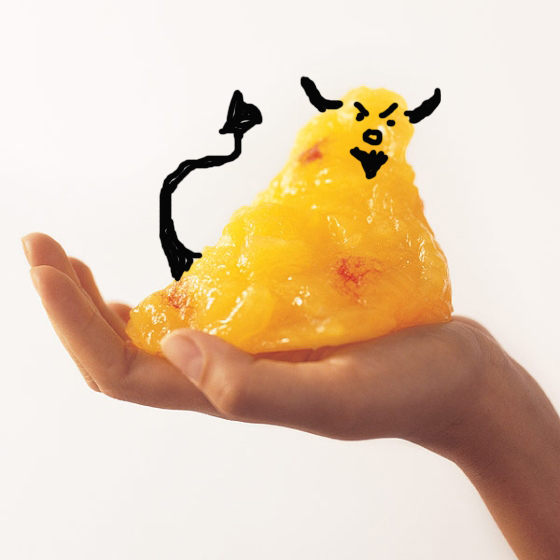
The ADA suggests that not all fat is “bad”.

Well it certainly has been a week of ups and downs.  On the one hand, we had the very disturbing news that the American Medical Association has gone against the recommendations of their own advisory committee and have declared obesity a disease.  I can’t see this as good news for anyone outside of obesity task forces and large pharma companies.  And I can’t help seeing this as anything as a black-or-white, gross, oversimplification of the issues of body diversity, and the role of fat in the body.

In the meantime, the research demonstrating the complexities of the issues surrounding fat, body diversity and obesity continues to roll out.  This very interesting article recently released by the American Diabetes Association highlights the results of some new studies conducted in both mice and humans about the role that fat plays in the body.  As always, I recommend caution when reviewing studies on mice as they don’t always directly correspond with results among humans.  However, both studies seem to suggest that fat behaves differently in the bodies of creatures that are exercising as opposed to those who are sedentary.  The study suggests that exercise changed the subcutaneous fat into higher concentrations of “brown fat” which has a different metabolic profile than “white fat”.  The study indicated that the brown fat provided better glucose tolerance and glucose sensitivities.

fatgood

The research seems to indicate that exercise can “train” fat to behave in a way that is more beneficial to the body, even without weight loss.

The upshot is that these studies lend further strength to the notion that exercise helps improve health even when weight remains the same.  The article states:

These studies suggest that even if you’re not losing weight, exercise is still training your fat to be more metabolically active; even if you don’t see the results on the scale, you are still improving your overall metabolism and therefore your health.

Does that mean you are under some sort of moral obligation to exercise?  Do you owe this to the world?  Absolutely not!  Your health is your business, and there are no moral requirements that you be healthy or do healthy things.  But if our goal, as a society, is to be healthy, maybe we should stop slapping a label on a significant portion of the human population that reads “sick” or “wrong” or “diseased”.  Maybe we should focus on making healthy behavior more accessible, more comfortable and safer for every BODY.  Yes.  Let’s do that.

Love,

The Fat Chick

P.S.  I’ll be speaking on the topic of exercise for every BODY this Friday in Chicago at the Wellness Beyond Weight event at the Doubletree by Hilton O’Hare in Chicago.  Drop by if you get the chance!  You can buy the tickets here!

Like my posts?  You’ll love my stuff!

Buy my book: The Fat Chick Works Out! (Fitness that is Fun and Feasible for Folks of All Ages, Shapes Sizes and Abilities)–available in softcover and e-book versions

Buy my DVD: The Fat Chick Works Out! (A Safe, Easy and Fun Workout for Klutzes, Wimps and Absolute Beginners!)

Buy a book or a DVD for a friend and save $5!  Just enter FRIENDBLFT in the discount code box!

Check out my Training Programs–both in person and via Skype (Starting at just $25!)

or

Book me to speak at your special event!
On Doggie Diversity

frenchiemirror copyIt’s always amazing to me, just how hard it is for people to wrap their heads around size diversity.  They readily accept that some people are tall and some people are short.  They accept that some people are good at math and some people can sing.  They understand that we come with different eye colors and different hair colors and textures and have different shoe sizes.  But when it comes to clothing sizes, when it comes to body composition–there is one size to rule them all.  And that size is small.

Why, oh why is it so hard to accept that there will be diversity in body weight and shape as well as height and color?  Some dogs are greyhounds.

GreyhoundSome dogs are pit bulls.

pitbullGreyhounds are not better than pit bulls.  They aren’t healthier.  In fact, pit bills on average live longer than greyhounds do.

No matter how much a pit bull diets, it will not be a greyhound.  It will just be a very, very thin pit bull.  The very thin pit bull will not be morally superior to other pit bulls.  It will not be healthier than other pit bulls.  In fact, it will probably be pretty sickly compared to other pit bulls and unless it is fed enough food, it will die of malnutrition and starvation.

And frankly, the notion that extremely svelte pit bulls look better in designer clothes is just a myth:

pitbull_ballerina

Frankly, tiaras are for dogs of every breed:

princebruiser

The reality is that the world is a place of wondrous diversity.  We come in all sizes, shapes, colors and types.  And that diversity is awesome.  It makes life interesting.  It helps us survive as a species.

doggydiversitySo instead of disparaging people who look a little different, let’s celebrate our diversity!  Then we can all run and frolic and play nice together.

Love,

The Fat Chick

Like my posts?  You’ll love my stuff!

Buy my book: The Fat Chick Works Out! (Fitness that is Fun and Feasible for Folks of All Ages, Shapes Sizes and Abilities)–available in softcover and e-book versions

Buy my DVD: The Fat Chick Works Out! (A Safe, Easy and Fun Workout for Klutzes, Wimps and Absolute Beginners!)

Buy a book or a DVD for a friend and save $5!  Just enter FRIENDBLFT in the discount code box!

Check out my Training Programs–both in person and via Skype (Starting at just $25!)

or

Book me to speak at your special event!

Your Big Fat ASSumptions: The Right Now Show Episode 014

donkeys-who-assume

Today’s episode of the Right Now Show shares two things that you may safely assume when looking at a fat person.  We also discuss five Big Fat ASSumptions that we routinely make about people of size and whether or not those assumptions have any validity.  Enjoy watching, and don’t forget to share with all your friends:

Here’s some additional information and resources you may want to consult after watching the show:

Want to join a whole lot of other people enjoying exercise in an environment which is free of fat shaming at weight loss talk?  Check out the Fit Fatties Forum!

Want to stay up to date on the very latest info about fat and health?  Join the Fat Chick Clique.  It’s free!

Here’s a link to a lot of the most recent research about Fat and Health on my website.

Here’s some more information about fat and shame on my blog:

Here’s a comprehensive review about fat and health which reviews over 100 other major studies about fitness, fatness and health:

Here’s some information offered by the Association for Size Diversity And Health about Health At Every Size (R):

P.S. Like my posts?  You’ll love my stuff!

Buy my book: The Fat Chick Works Out! (Fitness that is Fun and Feasible for Folks of All Ages, Shapes Sizes and Abilities)–available in softcover and e-book versions

Buy my DVD: The Fat Chick Works Out! (A Safe, Easy and Fun Workout for Klutzes, Wimps and Absolute Beginners!)

Buy a book or a DVD for a friend and save $5!  Just enter FRIENDBLFT in the discount code box!

Check out my Training Programs–both in person and via Skype (Starting at just $25!)

or

Book me to speak at your special event!

Fat and Bad Knees

naughtyknees

This ad for moisturizer suggests you use their body creme ” for sexy knees”.

One of the things I am constantly told as a fat person is that for fat people, knee pain is inevitable.  And in fact, I am told, I can expect a lifetime of “bad knees”.  Now, given my somewhat skewed view of the universe, rather than scaring me silly, the threat of “bad knees” usually make me think of an image like the one in the body cream ad above, or this silly image below:

BadKneesBut putting the silly pictures aside for a moment, I am an athlete who has had some problems with knee and leg pain my entire life.  I have been lucky enough to have some doctors who are great, but have also run into the all-too-common problem of fat-phobic doctors diagnosing me with having knees while fat.

My feet and leg problems started at birth.  When I was very young, and quite skinny, I was severely pigeon-toed.  As a result, I wore a brace with bars connecting my feet to bed every night.  It looked sort of like this:

footbraceNow I wore this brace to bed back when I was too young to untie and tie my own shoes.  I’m fairly sure that the need to get in and out of bed to go potty while wearing these things has shaped my sardonic view of the world, but I digress.

When I was in high school, and I was going through one of my thin periods, I ran track.  I ran the mile and the 2 mile races (mostly because nobody else wanted to…).  When I first started running, I had severe problems with shin splints.  Because I was thin, nobody thought that the solution was simply to tell me to lose weight.  We tried a variety of things including elaborate taping, different icing regimens and a lot of aspirins before somebody figured out that I just needed tennis shoes with a different sort of arch support.  For an investment of $25 the problem was solved.

Later in life, I suffered a few injuries.  I had a fairly severe meniscus tear in my knee as a result of leaping onto a pile of mats to adjust some audio equipment at the gym.  I also tore a ligament in my foot because I tripped on the front of my sandal and landed wrong.  Each of those injuries netted me a month or two on crutches.

So when I got midway through my most recent jaunt of marathon training, it’s not surprising that I found myself coping with some knee pain.  Luckily I had a great GP at the time who referred me to a sports medicine doctor.  He confirmed that I had a whole lot going on in the lower-extremities department.  He noted the flat feet (that I’ve had since birth) the fact that my feet pronate (also had since birth) and prescribed some custom shoe inserts and a few specific exercises I could do to strengthen my knee joint.  Problem solved.  Marathon finished.  Cheap medal and sweaty finish line photos earned.  And even though I was about the same weight then that I am now, neither my GP or my sports medicine guy gave me any flack about my weight.

444pmI didn’t realize then just how lucky I was.

Since then, I have moved and changed insurance and have had other doctors.  These doctors were not so great actually.  One of them asked about knee pain (I didn’t bring it up).  And I said, that yes, sometimes after a tough workout, my knees will be a little sore.  “Aha!” the doctor cried. “This is proof positive you need to lose weight.  If you lose weight, your knee pain will go away.  If you stay this weight your knees will hurt all the time!”

Okay.

The fact that my knees function at all, given the foot problems I was born with as well as the athletic injuries I’ve suffered is pretty amazing.  And at no point, did this doctor ask about any medical history regarding my feet, shoes, injuries, sports activities or anything else.  He simply predicted that I would be in pain as long as I was fat and that the remedy was simply to lose weight and keep it off.

Never mind that I didn’t come in there asking about knee pain.

Never mind that there is no method, and I mean NONE that is proven to be successful for long-term weight loss in most people and that even if I was one of the 5-10 percent of people who are able to lose weight and keep it off, there is no guarantee that it will do anything at all to relieve knee pain.

Never mind that there are successful methods of coping with knee pain that are widely considered effective for people of all sizes and that these methods have nothing to do with losing weight.

Nope, once this doctor diagnoses you with fat knees, the treatment is a single piece of paper with a diet on it.  According to Doctor Know-It-All, the way to fix your knee problems is, Breakfast: One egg (boiled), one piece of wheat toast (dry), one cup of coffee (black) and 4oz. orange juice, etc…

And my story is so mild compared to the other stories that I hear from folks about this subject.  People who are suffering from knee pain and told that all they have to do is lose weight and their knee pain will go away.  And they are told that their doctor won’t bother to try any other treatment for knee pain until after they lose weight.

It’s lazy and it’s unethical.

If you are coping with knee pain, there are some things you can do.  Very often, knee pain can be improved by correcting underlying muscle imbalances.  You can get help from a physical therapist or sports medicine specialist.  You can supplement this therapy with simple at-home exercises like those offered by my colleague Cinder Ernst.  Also, you may need to see a foot doctor to get custom inserts made for your shoes.  Sometimes simply switching to a good sturdy shoe with good arch support can make all the difference.

You may also find help, as I did from somebody who teaches Alexander Technique and can help you figure out what you are doing in your every day life that exacerbates your knee pain.

Exercise can really help folks coping with knee pain, but it’s important to do it the right way.  Make sure you get the help of an exercise instructor or personal trainer to make sure that you are working out in a way that strengthens and doesn’t threaten your knee joints.  I offer a few simple tips in this video.

Not all fat people have knee pain.  Not all thin people are free from knee pain.  But whatever your size, there are things you can do to protect your knees and help you cope with knee pain should it arise.  Make sure you get the help you need, and don’t let anybody scare, threaten or intimidate you by diagnosing you with having knees while fat.

Love,

The Fat Chick

Like my posts?  You’ll love my stuff!

Buy my book: The Fat Chick Works Out! (Fitness that is Fun and Feasible for Folks of All Ages, Shapes Sizes and Abilities)–available in softcover and e-book versions

Buy my DVD: The Fat Chick Works Out! (A Safe, Easy and Fun Workout for Klutzes, Wimps and Absolute Beginners!)

Buy a book or a DVD for a friend and save $5!  Just enter FRIENDBLFT in the discount code box!

Check out my Training Programs–both in person and via Skype (Starting at just $25!)

or

Book me to speak at your special event!

Dear Dr. Terrible Your Bigotry is Showing…

professorterribleRan across this in my facebook feed today and almost wanted to cry.  This tweet from Evolutionary Psychology Professor at NYU & U. New Mexico Dr. Geoffrey Miller is really special.  It states:

Dear obese PhD applicants: if you don’t have the willpower to stop eating carbs, you won’t have the willpower to do a dissertation. #truth

Here’s somebody who is at least in theory, well educated and yet he felt that he needed to tweet that absolute garbage.  Since the tweet has gone viral, he has taken it down and apologized.  But in my opinion, that is way too little and way too late.  Plus, I have to say, I find the apology a little bit suspect.  Here, let me interpret for you.

Dr. Miller states:

My sincere apologies to all for that idiotic, impulsive, and badly judged tweet. It does not reflect my true views, values, or standards.

Which means, “Oh crap, I could possibly get fired for this.  I’d better retract my statement ASAP.  I’ll just say I didn’t really mean it.  That will work, right?”

Dr. Miller goes on to state:

Obviously my previous tweet does not represent the selection policies of any university, or my own selection criteria.

Which means, “Upon further reflection (or after some very tense phone calls) I realize that some of the folks who were rejected for anything by me or any of the universities at which I teach may be somewhat upset.  In fact, they may just sue us into financial oblivion.”

So hey Dr. Miller, here’s my tweet to you:

Nobody believes your stupid and transparently self serving apology. #Find a good lawyer

I can find no excuse for this sort of behavior.  None. This guy is supposed to be a teacher.  This guy is supposed to be a scientist.  And he’s drawing this conclusion based on what evidence?  None.  He doesn’t like fat people, therefore they are lazy and incapable of doctoral level work.  Oh except, not really.  He didn’t really mean it.

The fact that this guy clearly gets to make decisions about who gets to apply for a PhD is utterly terrifying to me.  And speaking of terrified, I hope that both Professor Prejudice and his university are currently shaking in their shoes.  Even if an actual lawsuit from a student who was turned away from the  university is not forthcoming, I think might just be the opening breezes of a PR poopmageddon about to go down.  In fact, I think there needs to be a social media storm of biblical proportions over this tweet.  Do you hear that my dear readers?  Let’s start twittering and peeping and let our voices be heard!  This is a rare opportunity to talk about bias at the highest levels of our learning institutions.  This is an opportunity for us to educate the educators.  Let’s get the conversation started and keep it rolling!

Love,

The Fat Chick

Like my posts?  You’ll love my stuff!

Buy my book: The Fat Chick Works Out! (Fitness that is Fun and Feasible for Folks of All Ages, Shapes Sizes and Abilities)–available in softcover and e-book versions

Buy my DVD: The Fat Chick Works Out! (A Safe, Easy and Fun Workout for Klutzes, Wimps and Absolute Beginners!)

Buy a book or a DVD for a friend and save $5!  Just enter FRIENDBLFT in the discount code box!

Check out my Training Programs–both in person and via Skype (Starting at just $25!)

or

Book me to speak at your special event!

Only Fat People Need to Walk: As Indicated by Blue Cross Program

Study showing healthy habits most important for health outcomes.

Study showing healthy habits most important for health outcomes in ALL weight categories.

Oh dear.  I think it’s going to be hard to keep up with all of the discriminatory practices being rolled out by insurance companies to punish those who are fat.  But this new announcement from Blue Cross Network is really above and beyond.

Blue Cross recently announced that its program, offering cash discounts to obese members who agreed to add 5,000 steps a day and be measured via a pedometer was a “success”.  Discounts were significant–representing a cost savings of up to $2,000 per year per family.  Apparently these “discounts” were not offered to anybody who was not obese.  But Blue Cross is claiming success, due to the fact that most of those who enrolled in the program were still walking one year later.

I particularly love the fact that despite the fact that Blue Cross of Minnesota cites this press release as its source, the headline for their online blurb reads, “Money Motivates Weight Loss, One Step at a Time”.  I went back to the original press release.  I read it twice. Not one word is said in that press release about weight loss.  NOT ONE SINGLE WORD.  Holy “make it up as you go” reporting, Batman!  It is possible that there is some mention of the press release in the study announcing the findings.  But there is absolutely no mention of weight loss in the abstract.  And in my experience, were weight loss found in the study, it would be in the title of the study and the first sentence of the abstract.  If anybody has access to the full study, I’d love to know if this holds true.  But in any case, the piece on the Blue Cross webpage did not cite the study but rather the press release as its source.

Now, all of this leaves me with a few key questions.  First and foremost, is walking only beneficial to fat people?  Why in the world are they only offering this incentive to people qualified as “obese”?  There are so many studies that show that modest exercise is beneficial to everybody’s health.  And there’s plenty of evidence showing that healthy habits and not weight loss is what is needed to improve health outcomes?  So why are only fat people singled out for this treatment?  And are these actually “discounts” or are we really talking about being rescued from “fat penalties” not being faced by other insurance network members?

It’s also interesting to note that obese members were allowed to choose between this walking program (created by online biometric site, Walking Spree) or Weight Watchers.  Look, I would clearly pick a walking program over Weight Watchers any day of the week, but I wonder if these “obese persons” were interviewed to see if they had been exercising before this incentive was offered.  Were these people actually sedentary?  What about fit fatties like me who already exercise nearly every day?  Were we offered the same price increases/incentives?  Would I be expected to add this onto my already active exercise program?  Do I have to exercise three times as much as a thin person in order for my exercise incentives to “count” and my discounts to kick in?

I also find it extremely instructive that the first line of the press release reads as follows:

It was a controversial move when a health insurer began requiring people who were obese to literally pay the price of not doing anything about their weight – but it worked, a new study finds.

Okay.  First let’s look at the “not doing anything about their weight” line.  How do we know they weren’t doing anything about their weight?  We know that diet and weight loss attempts fail most of the time in the long term.  Some suggest they fail over 90 percent of the time.  So by “not doing anything about their weight” do we mean that people refused to engage in the dangerous practice of weight cycling? Do we know that people weren’t eating well or exercising before and that they are doing those things now?  Do we know that they were sedentary before and are now active?  Or were some of these people active before and have simply shifted to a less rigorous form of exercise (walking) than before in order to receive a discount on their health insurance?

It’s also interesting to note how the release defines “success”.  Again, nowhere in the release does it state that people lost weight.  Nowhere in the release does it state that there were positive health outcomes or lower healthcare costs.  In fact the final line of the release states:

“Comprehensive evaluations are needed to determine whether participation in these programs translates to meaningful changes in health and costs of health care.”

Overall, I have to state that this press release, issued by the University of Michigan Health System is astonishingly devoid of detail, definition or real facts.  While positively gleeful about the fact that most of the people who elected to participate in this program remained participants for over a year, it really leaves us with more questions than answers.  Did people who didn’t like the coercive nature of the program leave the network for a different insurer?  What were the changes in attitude towards exercise among participants?  Did they grow to like exercise more or see it as a punishment?  What are the long term effects on attitudes towards exercise?  And finally, why are we singling out fat people for this program?  Don’t thin people need to exercise too?

Aaaaaargh!

I guess I’m pretty worked up here.  Maybe I’d better go for a walk to blow off some steam.  Because some of us fat people go for walks even without “finger-wagging”, “pedometer-wielding”, “biometric-tracking” moralists telling us to do so.

Love,

The Fat Chick

P.S. If you’re looking for a form of exercise that doesn’t come with doom and gloom weight loss messages or any finger wagging whatsoever, you might enjoy buying a copy of my DVD.  And if you are a member of the Fit Fatties Forum, you’ll receive a special discount.  Just click here to order and type FFBL in the discount code box!

Redefining Female Superheroes

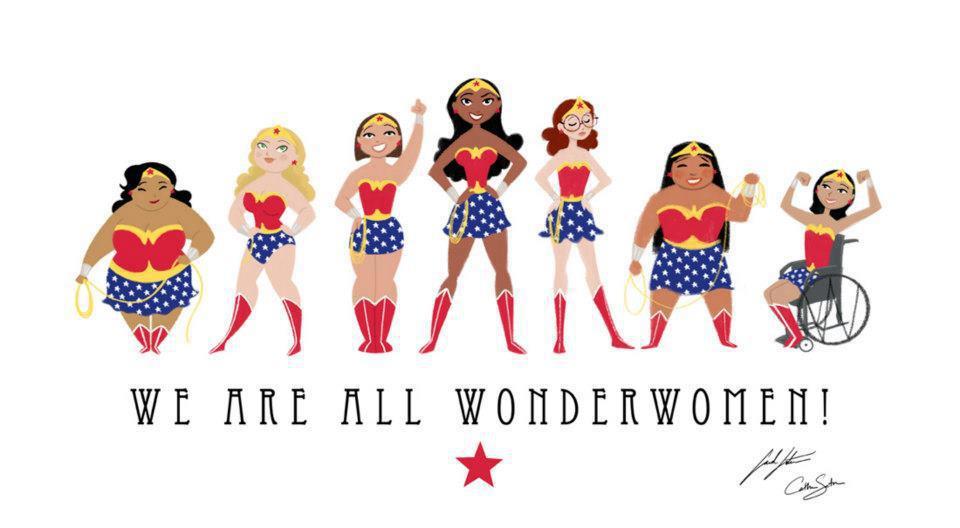
wonderwomen

I recently came across this blog post about a young woman who dared to go to Comic Con and participate in a portfolio review to share some of her drawings of female superheroes.  Among the drawings she submitted was this picture:

batgirlApparently, the reviews of the above drawing were rather brutal, not because the drawing wasn’t good, but because the woman in the drawing didn’t represent the proper proportions necessary for saving the world.  The artist reported that one reviewer said:

“Her breasts are much too small and do not have the lift that superhero women should have. Her jawline is fat and her neck much too long. The style of her hair is clunky and does not flow in a sense that a super human would. Her hips, waist and thighs are too big and she honestly looks fat. No one is going to want to read a comic with a fat female protagonist. I honestly recommend looking at issues of Sport’s Illustrated to get the right anatomy. Those women are the peak of human perfection, and that is what we want in this industry.”

Okay.  So what we want is the “peak of human perfection”–which for women, means perky breasts, thin hips, waist and thighs and flowing hair.  So while she’s saving the world, she can do promotional spots for hair conditioners and late night infomercials for fitness gimmicks?  Because the real superpower of a woman is boosting the economy with multifarious credit cards–assuaging her insecurity with extremely expensive but patently useless products, right? Right?

It’s perhaps not too surprising that a lot of people are starting to find this notion of female superhero as supermodel kind of frustrating.  And naturally, it has spawned some delicious and highly creative backlash.  (Yay, Internetz!) There’s this contest created on DeviantART inviting artists to submit their interpretations of a a fat female superhero. The creator of the contest shares her delight at both the incredible diversity of the drawings submitted and the fact that cartoonists are willing to step out of their comfort zone to draw body diversity.  There are so many cool pictures on there, it’s worth a look.  Seriously.

Then there’s this recent project, where Alexandria Law takes pictures of little girls dressed up like superheroes and draws them.  The photos of the kids are so cool.  These kids are clearly are having fun while demonstrating some well needed “girl power”.  I also love how the resultant drawings are powerful without being hypersexualized.  (Is that a real word?  If not, it should be.)

Little-Girl-Superheroes-09By the way, any kid that pairs a tutu and body armor wins super extra bonus points in my book.  And, I was heartened to see some movement towards recognizing that superheroes don’t all come in Sports Illustrated packages.

Which leads us to the origin of the picture on the top of this post.  It was created by Chicago artist twin sisters Sarah and Catherine Satrun.  They created this piece for sale at C2E2 (Chicago Comic Entertainment Expo in part as a response to those recent ads by Dove.  (More on that tomorrow).  And this image has started to go super, mega, viral. Which is curious in light of the reviewers statement that “nobody is interested in a comic with a fat female protagonist”.

So, my dear readers.  Here’s to the understanding that we are ALL Wonderwomen.  We all have the power to fly.  If not on stubby little wings like this fat chick, or an invisible plane, maybe with your very own superhero cape!

Then again, maybe not…

Love,

The Fat Chick