Tag Archives: fat

You know what’s fattening? News about the Obesity Crisis.

I wonder how many times studies will need to come out and people will need to talk about the damage caused by panic mongering over the obesity crisis before the media stops covering it.  I wonder if the media will ever stop sensationalizing fat.

Today I came across another article in U.S. News citing a small study that some women exposed to an article that appears to devalue fat people (how many of those do we see per day?)  seems to spur people to overeat.

The study was designed to determine if people who felt stigmatized for being overweight were likely to eat more, due to resulting anxiety or frustration, said study author Brenda Major. She is a professor in the department of psychological and brain sciences at the University of California, Santa Barbara…

Seeing media stories covering the so-called “obesity epidemic” and its potential impact on health care costs triggered Major’s interest in doing this study, she said. “There’s a frenzy about obesity in the media and there’s a negative, moralistic tone to the coverage,” she said.

Not surprising (to me at least) is that the results showed that presented with articles of how fat people were weak-willed or a high “cost to society” many of those studied turned to food for comfort.  The article cited other studies that indicate women placed in a situation where they felt devalued because of their weight had higher blood pressure and studies showing that discrimination based on weight can lead to weight gain.

And just this week, another study was released by the Rudd Center regarding the effect of weight stigma on cortisol reactivity.  What was truly fascinating about this study, is that perceived weight stigma affected the cortisol levels of all women, regardless of BMI.  So in other words, women of all sizes carried significantly greater levels of stress hormones after a single incident of weight stigma.  These stress hormones are related to many processes in the body including regulation of blood sugar and blood pressure.

All of which leads us to ask the question again.  Why oh why oh why does the world feel that it is okay to stigmatize fat people for their own good.  It doesn’t do fat people any good.  And in fact, there is ever increasing evidence that weight stigma makes people less healthy and probably makes them gain weight.

I think we have to start to wonder what various people and groups are getting out of wagging their finger at the fat folks.  Do they get a sense of superiority?  Do they get higher ratings?  Do I care why they do it?  Nope.  I just want them to stop.

Love, Jeanette (AKA The Fat Chick)

Why self esteem isn’t just about you.

I talk a lot about self esteem and self efficacy in this blog, because I think both of those things are very, very important. I think the way we see ourselves and the way we approach the world helps to shape our world.  On the other hand, I think it’s important to recognize that the world we live in shapes us in turn.  Both self esteem and self efficacy involve more than just self.  Because as John Donne said all those years ago:

No man is an island,
Entire of itself,
Every man is a piece of the continent,
A part of the main…

John Donne

We all function as part of the world.  Our self esteem is deeply influenced by the opinions of those around us.  And frankly, right now, the world is none too kind to people of size.  Feeling good about yourself is really tough in an world containing people who after one look at you consider themselves justified in considering you less than human.  Even when you approach the world in your best dress and your prettiest smile and your very most positive of positive thoughts, it’s tough going when what the world reflects back to you is pity, disgust, shame, disdain and yes, even fear.

And it’s also important to recognize that the tremendous amount of prejudice experienced by people of size in our culture is constantly reenforced by various factors.  The diet and weight loss industry is worth more than 60 Billion dollars in the U.S. alone.  And desire for a piece of the grant/research money pie has fueled a desperate fight against fat people also known as the “War on Obesity”.  A need to find a scapegoat in our difficult economic times and even more difficult health care landscape has led to the fat person as social pariah–blamed for everything from the high costs of health insurance to global warming.

I’m not telling you this because I want you to be depressed.  Far from it.  But I also want to pay homage to the fact that feeling good as a less than skinny person in our culture can be really, really difficult.  This is reality.  And any work that we try to do to feel good about ourselves needs to be seen in the context of this reality.

This is why I think it is so very important to build community to support one another.  I am by no means perfect in my self esteem.  But a great deal of any of the strength I do possess in this regard comes directly from my participation in the size acceptance community.  I am deeply indebted to those who have come before.  That’s why I think it is so important to honor others who are building a better and safer world for people of all sizes.  This year, we honored some of those trail blazers this year in the Shadow on a Tightrope anniversary.  And my dear friend and business collaborator Ragen Chastain is doing very important work in her documentary film project honoring the history of the heroes and heroines of the size acceptance movement.

And beyond just recognizing those who have gone before, there is a veritable army of people out there right now, working to make the world better for people of all shapes and sizes.  People like Marilyn Wann and Ragen Chastain.  Organizations like the Size Diversity Task Force and ASDAH and NAAFA.

So in your look to bolster your self-esteem, I’d like to encourage you to think beyond yourself.  First, I’d like to suggest that you take a look at some of the forces outside of yourself that may be dragging on you.  Learning to recognize these voices that send you negative and shaming messages is an important first step towards choosing what to take on board and what to throw away.

Next, I’d like to suggest that you find community.  Get together in the real world or the virtual one, with like-minded people who allow you to feel supported and safe at any size.  I can’t emphasize enough how much community has helped me and supported me and strengthened me.

Finally, I’d like to ask you to consider how you might help others feel good about themselves.  It’s not enough to simply take.  Community implies a sharing of talents and resources and our very selves.  That’s not to say that we all need to help in the same way.  Some of us will march in protests.  Some of us will send scathing letters.  Some of us will simply support one another with a quick hug or a kind word in the comments section.

None of us is an island.  We are all a piece of the continent, a citizen of the world, a member of the universe.  It’s up to all of us to make that universe a better place for ALL of us.

Love, Jeanette (AKA The Fat Chick)

Wicked Witch Hands Fat Kids Shame-Filled Letter instead of Candy

*Loud record scratch noise*

We interrupt our regularly scheduled blog to make this public service announcement.  Apparently a woman in North Dakota called into a local radio station saying that she will hand trick-or-treaters that she deems too fat a letter along with their candy.  The thin kids will just get candy.  After the interview, she emailed a copy of the letter she plans to send along to the radio station.

Want to know what the letter will say?  Here it is in all its glory:

Happy Halloween and Happy Holidays Neighbor! [Picture of a cute pumpkin]

You are probably wondering why your child has this note; have you ever heard the saying, “It takes a village to raise a child”?  I am disappointed in “the village” of Fargo Moorhead, West Fargo.

Your child is in my opinion moderately obese and should not be consuming sugar and treats to the extent of some children this Halloween season.

My hope is that you will step up as a parent and ration candy this Halloween and not allow your child to continue these unhealthy eating habits.

Thanks!

Yup,  apparently this woman called into a radio station (anonymously) and claimed she would be handing these letters out to the fat kids this year.  She won’t tell us her full name or where her house is.  There is no way for a parent to avoid this house with their kids because nobody [as yet] knows where she lives.  But she says she’s going to do this, because, “It takes a village, people!”.

I guess nobody told her that she’s been designated the village idiot and thus probably won’t be put in charge of the welfare of the village children this year.

This whole thing is so appalling, I frankly had a hard time figuring out where to start.  So I guess we’ll start at the beginning of this amazingly articulate missive.  *Insert eye roll here.*

It begins “Happy Halloween and Happy Holidays Neighbor”.  Because nothing says “happy holidays” quite like shaming your child in front of his peers and offering unsolicited and uninformed opinions on your parenting skills.  But that’s okay because I’ve got crappy clip art of a jack o’ lantern here, see?  And the jack o’ lantern is smiling so that means I’m being nice.

“You are probably wondering why you are receiving this note;”  Yes indeed.  I am wondering why you decided to send a judgmental and shame-filled letter home with any child.  Since we all know that shame doesn’t make kids healthier, happier or thinner, I would  really like to know why you thought it was okay to do that to a kid in front of her peers.  Given the fact that shaming kids tends to lead to unhealthy behaviors including binge eating, drug use, alcohol abuse, smoking and eating disorders, I would really like to know what made you think this was okay.

The letter goes on, “have you ever heard the saying, “It takes a village to raise a child?”  Yes I’ve heard this saying, but I’m pretty sure it means something different than you think it does.

Then the letter says, “I am disappointed in “the village” of Fargo Moorhead, West Fargo.”  To which I would respond.  Well I am too.  If the village contains judgmental people like you who think that, based solely on a child’s appearance you have the right to shame that kid in front of his friends and send an anonymous letter to the parents telling them that they don’t know how to raise him, I think our “village” has a problem.

Okay, this next line makes me incandescent with rage.  She says, “Your child is in my opinion moderately obese and should not be consuming sugar and treats to the extent of some children this Halloween season.”  O.M.G.  First of all, how exactly are you determining that the child tips the scales as “moderately obese”.  Are you measuring height and weight and calculating B.M.I. on the fly?  Are you pulling some skin calipers out of your “candy cauldron” and doing a little skin fold testing there on your front porch?   Or are you basing your calculations on which kids are chubby in a way that insults your delicate sensibilities?  Oh wait, I forgot.  It says it’s your opinion.  Did I ask your opinion?  Did anyone?  No?  That my dear villager is a sign you should Just. Shut. Up.

But the last sentence of the letter is the real kicker.  She closes by saying, “My hope is that you will step up as a parent and ration candy this Halloween and not allow your child to continue these unhealthy eating habits.”  It is unbelievable how many unsubstantiated assumptions this woman is able to cram into one little sentence.  It assumes that the parent is not doing their job.  It assumes that the child has unhealthy eating habits.  It assumes that the parents don’t ration candy.  It assumes that the parent is unaware that the child is chubby and is somehow negligent as a parent.   Does she know this because she knows the child and the family and the situation?  Does she have a crystal ball that shows definitively, in each particular situation what is happening in that child and family’s life?  Does she know if the kid is taking medications that make weight gain more likely?  Does she know if the kid has a metabolic disorder?  Does she know if the kid has just lost a parent or is coping with unbridled bullying at school? Or is she spewing hate all based on the fact that Tammy’s tutu is a little too tight?

And she closes with the word “Thanks”.  Yes, and let me also offer my thanks.

Thanks for shaming kids in front of their friends.  I’m sure that will make everything better.

Thanks for taking the one holiday of the year which is really about kids having fun and wrecking it for them.

Thanks for offering your completely unsolicited and unsubstantiated, bitchy and judgmental opinions on people’s parenting skills based on your personal prejudice.

Thanks for making kids cry.

Thanks for increasing the chances these kids will turn to drugs, alcohol, tobacco or an eating disorder, because everyone knows, a fun-sized Snickers bar is the worst thing in the world.

Thanks so much for staying anonymous while you are bullying kids.  Because nothing says, “It takes a village” quite like putting on a mask and lobbing fireballs at children from behind a wall at a safe distance.

The kicker has to be the moment in the radio interview when asked by the hosts of the show why she didn’t give out toys or stickers instead of candy.  Our protagonist, who identified herself only as Cheryl, said she didn’t want to be the “mean lady” in the neighborhood.

Um.  I’m sorry.  That’s not what you meant.

What you really meant is that you only wanted to be mean to the FAT kids, so that makes it okay.

Trick or Treat is supposed to mean give me a treat or I’ll play a trick on you.  All I can say, is that if this woman actually follows through and hands out these letters, she is likely to face some pretty staunch retribution. #theVillageTPdYourHouse.  I think she might find the village throwing eggs at her very fragile glass house.

Love,

Jeanette DePatie

AKA The Fat Chick

 

Six Year Old Girl Dies–Diagnosed as Fat?

dibetesSlides.002-001Sorry to start your week out with such a sad story, but I think it needs to be told.  Late last week I became aware of the story of Claudialee, a six-year-old girl who passed away after being misdiagnosed with type 2 diabetes, when she actually had type 1 diabetes.  There is a very detailed account of the story here.

I’m not going to go into every detail of this story, but I did want to point out a few things that stand out for me.  One is that Claudialee has a family history of diabetes.  Another is that the doctor diagnosed Claudialee as obese.  It is clear that the doctor was deeply concerned about the young child’s weight–prescribing diet and exercise in an effort to get her to lose weight.  It is also clear that the mother closely followed the doctor’s recommendations–carefully monitoring what Claudialee ate and making sure she got plenty of exercise.

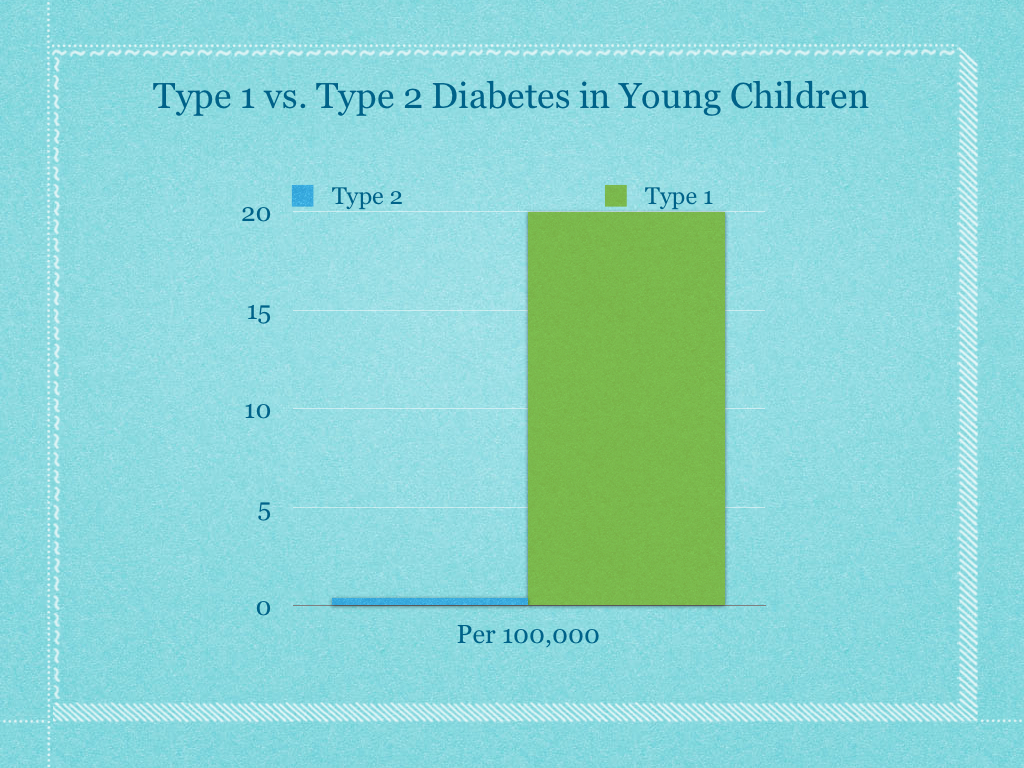
What is not clear is why the doctor felt so strongly that this child had Type 2 Diabetes as opposed to Type 1.  According to a source cited in the article (The National Institute of Health) at that age group, Type 1 Diabetes has an incidence of about 20 in every 100,000 kids, whereas Type 2 Diabetes has an incidence of .4 in every 100,000 kids or 1 in every 250,000 kids.  What’s more, at that age, Type 1 Diabetes is a far more urgent problem than Type 2 Diabetes.  So what led to the doctor’s misdiagnosis?

We may never know for sure.  But it does invite one to speculate whether the child’s weight was a factor.  Clearly, getting Claudialee’s weight down was a prime part of the prescription to the parent.  And as the child’s weight went down, the doctor neglected to do some of the critical follow-up blood tests that would have indicated that something was drastically wrong.

The article states:

Because Mercado [the doctor] had locked in on type 2, she did not monitor her patient’s blood. She did not tell Irma [the child’s mother] to purchase a $20 blood sugar meter from the drugstore. She did not ask Irma about the frequency with which her daughter drank and urinated. And neither she nor Cabatic [another doctor] described to Irma the danger signs to look out for.

When asked in court, why the doctor seemed so certain that the child had type 2 diabetes when type 1 diabetes was so much more prevalent among children that age, she stood by her original diagnosis:

“How many type 2 infant diabetics have you treated?” a lawyer asked her.

“A lot,” she replied. “Maybe it’s geographical, because I work at Brooklyn as an assistant professor and also in wellness program where there are a lot of obese children, so we diagnose a lot of children with type 2 diabetes.”

Clearly there may have been other issues at play here.  Claudialee was on Medicaid and doctors are paid significantly less for treating patients on Medicaid than they are for those with private insurance.  The doctor was not board-certified, and the article points out that finding board certified physicians willing to work in clinics that take Medicaid can be difficult.  And this is a single case where a single doctor has been convicted of malpractice.  We will never know exactly what was in the doctor’s mind.

I but I personally found myself wondering if this doctor had ever previously considered that she may have a bias against fat patients–and maybe even fat children with low SES in particular.  I wonder, had this doctor considered the potential for her own bias in this arena, would that child still be alive?  Would Claudialee still be running around and playing today?

We certainly have plenty of evidence for a seeming “hysteria” around the issue of childhood Type 2 diabetes.    A simple google search of “childhood diabetes epidemic” yields hundreds and hundreds of articles.  This hysteria has spawned a number of shaming techniques aimed at children despite the fact that shame has been proven over and over again to be ineffective at treating obesity at any age, that shame is more likely to make kids engage in unhealthy behaviors, and that eating disorders are much, MUCH more prevalent among children than diabetes of any kind.

dibetesSlides.001-001All I know for sure, is that stories like that of Claudialee get me even more fired up to fight against weight stigma in medicine.  And that passion leads me to come to you with a plea.  The Association for Size Diversity And Health and the Size Diversity Task force have embarked on a documentary film project to help doctors see and understand weight stigma and weight bias in medicine.  This project is called the Resolved project.  But this project needs a little bit of help from you.  We are raising funds to finish the documentary on Go Fund Me here.  Any help you can offer would be greatly appreciated.  Even if  you can only give a few dollars, that will help.  And if  you don’t have a few dollars to spend, would you consider sharing this with your friends and asking them to help?  Let’s see if we can end weight stigma and weight bias in the healthcare industry for good.  And maybe, just maybe we won’t have stories like Claudialee’s any more.

Love,

Jeanette (The Fat Chick)

P.S. Want to stay up to date on my projects and appearances?  Just opt in RIGHT HERE!

I’m Back! (With a New Video)

Maybe we all need to do a little more dancing...

Maybe we all need to do a little more dancing…

Okay kids, I’m a little bit tardy (2 days) but I am back with a renewed desire to offer you juicy blogging goodness.  And I’m back with a brand new video showing just a little bit of what I’ve been up to for the past few weeks.

On September 18, we held our second annual Hot Flash Mob in Justin Herman Plaza on the Embarcadero in San Francisco.  The weather was GLORIOUS!  Our initial turnout was small, but after some rapid recruiting among those enjoying the fabulous San Francisco sunshine we got a crowd together and did our dance…

This crowd was a great mix!  There were men and women.  There were older people, younger people and in-betweenies.  There were thin people and fat people and people with amazing hair and even a cameo from one of San Francisco’s street population.  We all had a wonderful time.

And all of this makes me more determined THAN EVER to get groups of people together and get them dancing.  Because dancing is sort of like a magic catalyst.  It crosses line of age, shape, gender, class, language, economic status and more.  And even if you can’t do the moves just like I do, we can all find and share the beat together and boogie down.

It this time of serious strife and division, where I almost can’t bear to look at the news and hear the latest details about the complete breakdown of civility and communications, I think it is more important than ever to just dance.

Maybe that’s what we need to do.  Just get all the politicians in the world together to dance:

Then again, maybe not…

Love,

Jeanette

P.S. Want to get access to FREE STUFF?  Just opt in RIGHT HERE!

Proof Please

Web_Proof

So very often these days we hear that the world has deemed to help the portly because they so desperately need help and the world is being nice–and stuff.  Millions upon millions are invested in trying to prove that fat people are unhealthy, and if they would just eat a little less and move a little more, all their problems would be solved, everybody in the world would be healthy, and good, quality health insurance would cost everybody $1.  The fact that despite the millions of dollars spent, nobody has been able to prove these or demonstrate any way to make this magical weight loss happen on all but a fleeting and temporary basis doesn’t seem to deter anybody from testing this hypothesis again and again.

And even when the proof is not available, or indeed the available evidence says that your “weight intervention” causes negative effects and makes people fatter current policy seems to involve simply ignoring those pesky little facts.

Take the current practice of weighing and measuring kids at school and then sending home “BMI report cards”.  Despite showing again, and again and again that shame doesn’t make kids thinner or healthier, showing that shame causes kids to engage in more unhealthy behavior, that shame makes kids fatter, we still do this.  Why?  The National Eating Disorder Information Center issued the following statement regarding BMI testing in schools:

What the American Academy of Pediatrics (AAP) seems to be ignoring in its advocacy of weighing and measuring the height of schoolchildren is the risk it carries not just to increase body-based bullying from student’s teachers and peers, but the risk to children’s developing self-stigma and poor body image.

Body-based bullying continues to be the most common cause of bullying in youth. 29% of girls and 15% of boys are already teased about their weight at home. By grade seven, up to 30% of girls and 25% of boys are teased by other students. Poor body image has been found to stop youth from engaging in social, academic and physical opportunities. It limits willingness to express an opinion. In perpetuating focus on body shapes and sizes rather than on encouraging health providing attitudes and behaviours in children regardless of size, what are our schools (and public health) teaching?

However, it seems that plans to do BMI testing and BMI report cards in schools is continuing throughout North America.

This also reminds me of another recent situation I had recently reported.  Blue Care of Michigan is still touting the positive results of their “enforced march” walking program for fatties despite the fact that there is no evidence at all that those who participated either lost weight, or had any positive health outcomes associated with the program.  They apparently did nothing to track the original fitness level of the plus-sized participants and had no idea whether or not these folks were already active.  They just told these people that unless they wanted to pay an additional $2,000/year they had to participate.  They also forced those who participated to either be a member of Weight Watchers or wear a monitor which counted their steps during the day.  Just like a prisoner, they were forced to wear a physical implement on their bodies that told their insurance overlords what they were doing throughout the day.  Just because their BMI is over 30.  They declared this project a success even though nearly 1/3 of the 12 percent of participants who bothered to respond to the survey said they hated the program and found it coercive.  For more information, you may wish to read this article from my friend and colleague Jon Robison.

Throughout all this rhetoric about making fat people into “healthy thin people”.  Throughout all this spending on proving that fat people can become thin people on more than a very temporary basis and that making fat people into thin people will make them healthy there is one thing continually missing and that thing is proof.

When the available evidence points to the opposite of the fat people can become thin people, or fat people can’t be healthy people or fat kids just have ignorant parents rhetoric, the powers that be either request more money to re-test the hypothesis or simply ignore the inconvenient facts.

You may have heard of iatrogenic effects in medicine.  Dictionary.com defines them as: (of an illness or symptoms) induced in a patient as the result of a physician’s words or actions, esp as a consequence of taking a drug prescribed by the physician.

And good old Dictionary.com also defines iatrogenic as relates to social welfare: “(of a problem) induced by the means of treating a problem but ascribed to the continuing natural development of the problem being treated”.

Some experts have suggested that the “obesity crisis” is a textbook example of iatrogenic effects in both medicine and social welfare.  But I wonder if the “obesity crisis” isn’t responsible for iatrogenic effects in the economy as well.  If the response to the mounting pile of evidence that “diets don’t work” and “shame doesn’t work” and “fat people can be healthy” is always, “let’s pay for more tests” or “let’s do the weight loss junk but try harder this time” the obesity crisis will continue to be very, very expensive.

But I think the treatment for the economic effects of the hysteria surrounding the “obesity crisis” may be as simple as this.  Demand proof.  If your insurance company wants to put you on a walking program without doing an intake of any kind or presenting any data regarding the efficacy of the program, demand proof.  If your kid’s school wants to measure their BMI along with everybody else’s and send home a BMI report card, demand proof that this makes kids happier or healthier.  It’s not easy.  It’s not fun.  But the rights of fat people to enjoy life, liberty and the pursuit of happiness demands that we, the fierce fat folks, demand proof.

Love,

The Fat Chick


Like my posts?  You’ll love my stuff!

Buy my book: The Fat Chick Works Out! (Fitness that is Fun and Feasible for Folks of All Ages, Shapes Sizes and Abilities)–available in softcover and e-book versions

Buy my DVD: The Fat Chick Works Out! (A Safe, Easy and Fun Workout for Klutzes, Wimps and Absolute Beginners!)

Buy a book or a DVD for a friend and save $5!  Just enter FRIENDBLFT in the discount code box!

Check out my Training Programs–both in person and via Skype (Starting at just $25!)

or

Book me to speak at your special event!

Big Fat Yoga Pants

Yesterday a brouhaha was begun when former Lululemon employee Elizabeth Licorish told reporters that her former employers routinely discriminated against larger customers.  In other news, water is wet.

I mean come on.  The store only stocks clothes up to size 10 or 12.  And they label their size 12 as XL.  Clearly this is a company who has never catered to a plus-sized clientele.

Licorish claims that while she worked at Lululemon, the company only stocked a few items in sizes 10 and 12.  She also asserts that these lonely larger sizes were not displayed prominently in the front, folded neatly on shelves or hanging from display racks, but rather, were crumpled up in the back.

Which leads me to ask a question.  How exactly is this different from nearly every other retailer on the planet?  Aside from the few stores like Lane Bryant and Torrid and Christines that cater specifically to plus-sized customers, most stores have pitiful, tiny poorly managed sections for their larger clothing.  Even if you look at the major, high-end department stores, the plus-sized section is much smaller, has much less inventory and is less well-staffed than virtually any other clothing department in the store.  Given the fact that about half of American women are plus-sized, I have a hard time understanding the reason why plus-sized clothing gets less than 10 percent of the floor space devoted to clothing in the local neighborhood mall.

Lululemon is not so different than most clothing companies, in that they fail to see the amazing market afforded by plus-sized customers and they are letting their brand arrogance lead them into leaving millions of dollars on the table.

But they know this already.

So instead of yelling at Lululemon for improperly displaying the “ginormous” size-12 yoga pants retailing for over $100,  I’m going to take this moment to remind the world that there are now some truly fabulous resources for budding plus-sized yogis out there.

On our Fit Fatties Forum we have the super amazing Abby Lentz moderating our Yoga group.  Aside from being an awesome yoga teacher, Abby also has her Heavyweight Yoga DVD and an especially cool feature on her website called “Change the Image of Yoga” where she features lots of beautiful, smiling yogis who don’t look anything like the ads or the saleswomen you’ll find at Lululemon.

Another wonderful Yoga Teacher that I know and love is Anna Guest-Jelley.  Anna is founder of Curvy Yoga and also offers certification for other teachers who are interested in learning the Curvy Yoga method of instruction.  She also offers her world-famous 30 Days of Curvy Yoga program.

And if Lululemon pants fit neither your butt nor your budget, you might want to check out the yoga wear at Junonia.com.  They have some lovely, high-quality pieces of yoga wear available up to a size 6x.

So may  I make a suggestion?  Rather than be upset that one hoity-toity “yoga wear” company doesn’t want to take your money, how about supporting one of these amazing businesses?  Help them to help you and many, many others to spread the word that yoga is for every BODY.

Love,

The Fat Chick

Like my posts?  You’ll love my stuff!

Buy my book: The Fat Chick Works Out! (Fitness that is Fun and Feasible for Folks of All Ages, Shapes Sizes and Abilities)–available in softcover and e-book versions

Buy my DVD: The Fat Chick Works Out! (A Safe, Easy and Fun Workout for Klutzes, Wimps and Absolute Beginners!)

Buy a book or a DVD for a friend and save $5!  Just enter FRIENDBLFT in the discount code box!

Check out my Training Programs–both in person and via Skype (Starting at just $25!)

or

Book me to speak at your special event!

Right Now Show Episode 16: The Fat and Proud Project

fatandproudJLDIn episode 16 of the Right Now Show we discuss the Size Diversity Task Force’s New “Fat and Proud” project.  We also talk about why The Fat Chick has chosen to reclaim the word “fat” and how we can use that word to describe but not to define us as people.  Enjoy!

You can learn more about why Jeanette calls herself The Fat Chick on her website here:

You can learn more about the Fat and Proud project and download the page templates on the Size Diversity Task Force Web page here:

Learn more about the Size Diversity Task Force here:

Read a fascinating discussion about how one organization is coping with the word “fat” on Ragen Chastain’s awesome blog right here:

Subscribe to the Right Now Show here:

Become my friend on facebook here:

And join my mailing list here:

Love,

The Fat Chick

New Zealand Tells South African Chef, “You’re Too Fat to Live Here!”

I know I am not the first and I certainly hope I’m not to write about this story.  Because you know what?  This scares me right out of my sparkly, yet sensible shoes.  Last week, New Zealand immigration officials told South African chef Albert Buitenhuis that due to his weight of 286 pounds he has an “unacceptable standard of health” and faces expulsion from the country.  Despite the fact that Buitenhuis has actually lost weight since he was originally admitted to the country in 2007, he has lost his work visa because he failed to lose weight.

He needed to stop working immediately.  And because Albert was the primary applicant on the original work visa, his wife needed to stop working as well.

An immigration spokesperson has stated that Mr Buitenhuis’s application had been rejected because his obesity put him at “significant risk” of complications including diabetes, hypertension and heart disease.  The spokesman reportedly said:

“Unless it is in the extreme, obesity will not in itself cause an applicant to fail health screening requirements, but INZ’s medical assessors have to consider to what extent there might be indications of future high-cost and high-need demand for health services,”

It should be noted that Albert may also need a knee replacement which could cost the health system over $20,000.  However, it has also been reported that the fact that Mr. Buitenhuis’ BMI was over 35, originally triggered the rejection of his work visa renewal.

This story has hit international news outlets including the Daily Mail and the BBC.  So I am hopeful this won’t just slip into obscurity in the next day or two, and I am eager to hear how Albert’s appeal process proceeds.  Because I have to admit, I find this story terrifying and frustrating in the extreme.

Here are just a few points:

1.  Immigration officials arbitrarily choose to apply or not apply BMI statistics in regards to work visa renewal.  If the irrational or irregular application of body size regulations are enough to leave people traveling on a jet plane in the lurch, think of the effect it can have on people moving their entire lives from one country to another.  And as we’ve seen in regards to flying on airplanes, if fat people are unable to ascertain exactly how these regulations will apply to them they are more likely to avoid the situation altogether.

2.  It appears that the rules changed after Albert moved to New Zealand.  Albert and his wife set down roots, made friends, built a career and a life, and then the rug got pulled out from under them.  This should be a chilling tale for everyone interested in ever immigrating anywhere.

3.  It appears the New Zealand Immigration ministry are using BMI and health interchangeably.  There is ample evidence that as a health metric BMI is extremely problematic and unreliable.  There is significant evidence that people who have a BMI in the “ideal range” actually live shorter lives than those in the “overweight” range.  Furthermore, I have heard no indication that New Zealand’s Immigration ministry are using other, far more reliable health metrics in determining visa renewal status.  Are they taking into account issues like: stress level, sedentary lifestyle, tobacco use, levels of discrimination, lack of sleep, working third shift or driving a motorcycle, being older, or being male?  There’s also evidence that bald men are more likely to have heart disease and taller women are more likely to get cancer.  Why are they taking this one extremely unreliable metric (BMI) out of context and using it to determine immigration status?

4.  Is BMI used because it is a “cheap shot” both figuratively and literally?  Despite the many, many questions about the effectiveness of BMI as a health metric, there is no question that it is extremely easy to measure and verify.  And I wonder whether discrimination based on body size is cheap politically as well?  Immigration necessarily needs to limit the number of people who can enter and stay in a country.  And they need to make sure the limitations that are used are politically tenable.  Are fat people singled out and discriminated against simply because politically, they are easy targets?

I admit that I can’t claim to know everything that is going on in this case.  I will be watching with interest to see how it plays out.  But, in any case, I think this is further proof that we need to be ever vigilant of new ways that discrimination is heaped upon people of size.

Love,

The Fat Chick

UPDATE: Don’t miss this amazing post by Angela Meadows in Huff Po!  And don’t forget to like the story and comment if you have the sanity points to spare!

Like my posts?  You’ll love my stuff!

Buy my book: The Fat Chick Works Out! (Fitness that is Fun and Feasible for Folks of All Ages, Shapes Sizes and Abilities)–available in softcover and e-book versions

Buy my DVD: The Fat Chick Works Out! (A Safe, Easy and Fun Workout for Klutzes, Wimps and Absolute Beginners!)

Buy a book or a DVD for a friend and save $5!  Just enter FRIENDBLFT in the discount code box!

Check out my Training Programs–both in person and via Skype (Starting at just $25!)

or

Book me to speak at your special event!

Why We Can’t Forget Dr. Geoffrey Miller AKA Professor Terrible

It seems a lot of the uproar surrounding Dr. Geoffrey Miller has died down.  But a new study out of Bowling Green University helps to confirm that this issue of discrimination against fat college applicants is real and maybe it’s really, really important that we don’t stop talking about it.

For those of  you who might not remember, Dr. Geoffrey Miller got himself in just a little hot water for tweeting:

“Dear obese PhD applicants: if you don’t have the willpower to stop eating carbs, you won’t have the willpower to do a dissertation #truth”

As I predicted, the PR poo storm did indeed hit “Biblical proportions”–at least for a while.  Dr. Geoffrey tried a multitude of evasion tactics, including a half-hearted, insincere apology and claiming that he was doing some sort of research experiment.

Many of us, including me called shenanigans on his post tweet wiggling.  And the University of New Mexico pledged to look into the whole “research experiment” claim.  They did.  And not surprisingly, they decided that the claim was baseless, that the tweet doesn’t qualify as research and they are continuing a disciplinary investigation. UNM suggests that the investigation would take several more weeks.   NYU, has not indicated they have any intent of pursuing disciplinary action against the tweeting professor.

Since then, the world has not paid much attention to Dr. Geoffrey Miller  or the issue of fat discrimination in college.  And that’s not good.

Because the study out of Bowling Green indicates that this business of fat discrimination for college applicants is a really big problem.  And as the amazing Lesley Kinzel of Two Whole Cakes points out in her brilliant article in xoJane, this is hardly the first study to indicate that fat bias in college admissions.

But the Bowling Green study looks very specifically at the issue of when college students experience the discrimination and the disproportionate effect the discrimination may have on women.  The study found that when fat and thin students did an in-person interview, the fat applicants were less likely to be admitted to college.  However, the study found, when applicants were interviewed over the phone, fat students were admitted at about the same rate as thin ones.

So my dear readers, I suggest that this is no time to be quiet on the subject of Dr. Geoffrey Miller, his ill-considered tweets or the subject of discrimination in college admissions.  Maybe now would be a good time to write some letters to NYU and UNM to let them know that Dr. Geoffrey Miller should not be let off the hook and that we are deeply concerned about college admissions discrimination.

Love,

The Fat Chick

Like my posts?  You’ll love my stuff!

Buy my book: The Fat Chick Works Out! (Fitness that is Fun and Feasible for Folks of All Ages, Shapes Sizes and Abilities)–available in softcover and e-book versions

Buy my DVD: The Fat Chick Works Out! (A Safe, Easy and Fun Workout for Klutzes, Wimps and Absolute Beginners!)

Buy a book or a DVD for a friend and save $5!  Just enter FRIENDBLFT in the discount code box!

Check out my Training Programs–both in person and via Skype (Starting at just $25!)

or

Book me to speak at your special event!