Tag Archives: eating disorders

A Sensible Approach to Healthy Kids

Folks of ALL ages dancing their hearts out!

Folks of ALL ages dancing their hearts out!

I have to admit that the blog post I did on Monday broke my heart.  The idea that it is even possible that a six-year-old girl may have died because of weight stigma is just so sad.  I need to reiterate, that none of us can know precisely what that doctor was thinking.  But the testimony she gave at her own trial makes me more than a little suspicious.

And you know what?  It doesn’t have to be this way.

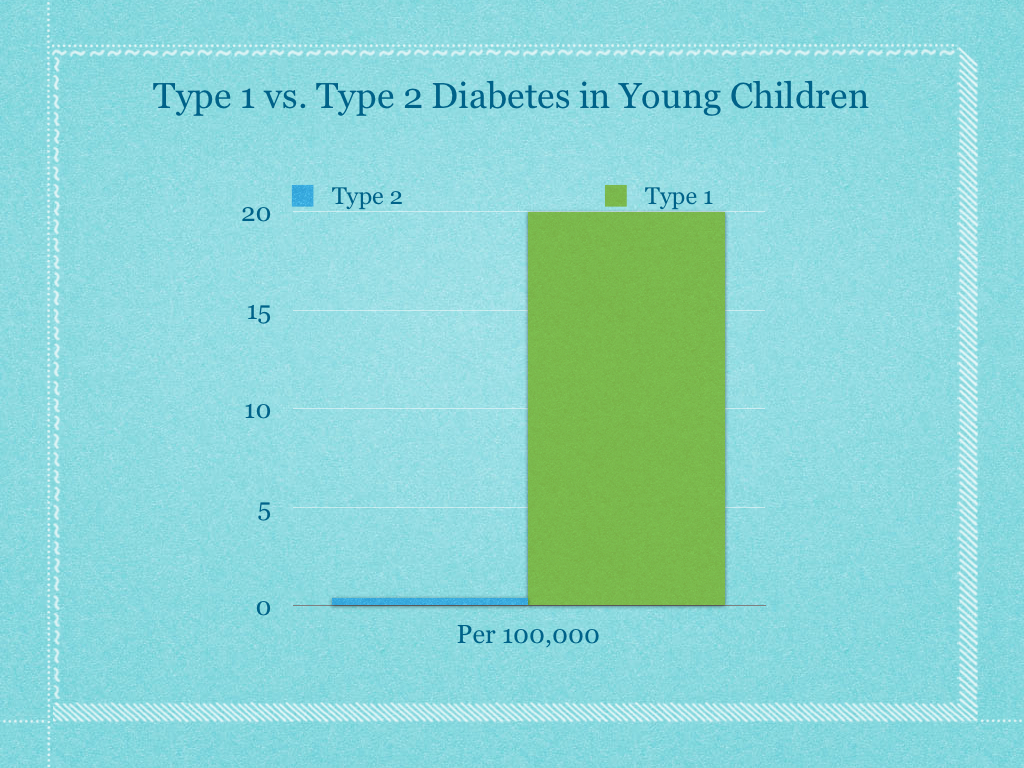
There are far simpler ways to help kids be healthy.  Not the least of which is simply helping them find safe places to play and joyful places to move their bodies.  Because one of the best things we can do to help kids be healthy is offer them fun ways to get exercise. Yet another study came out this week that indicates that cognitive abilities among kids have a lot more to do with fitness levels than BMI.  But this fact, doesn’t seem to deter those who feel the best way to help kids be healthy is to send home a BMI report card.  Despite the fact that BMI is very loosely correlated with health in young children, and that focusing on BMI makes kids more likely to develop eating disorders, and that focusing on BMI tends to lead to shame in kids which not only makes them develop other bad health behaviors, but also tends to make them gain weight, we are STILL PERPETRATING THIS NONSENSE IN SCHOOLS.  Let’s focus on helping kids be healthy without increasing the risk from eating disorders.  Remember this chart?

dibetesSlides.001-001

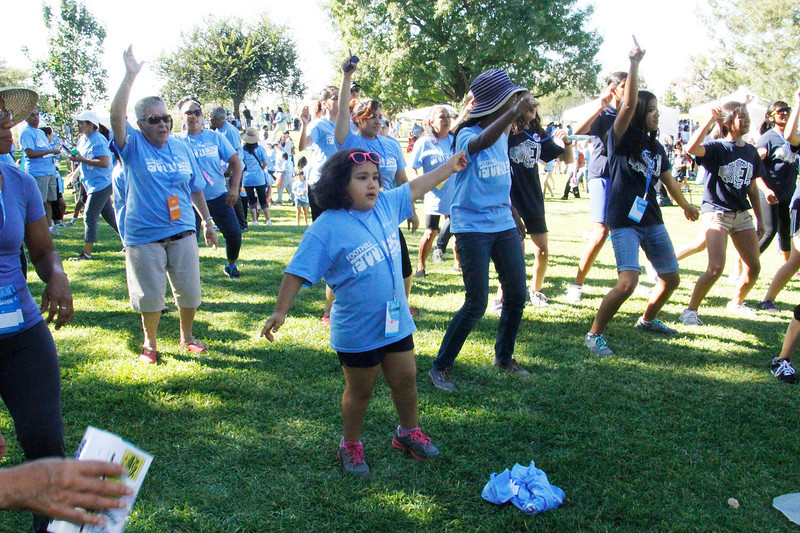
Helping kids be healthy can be positive and fun.  This past weekend I led some fitness demonstrations at a local event.  The City of Hope hosted its Foothill Fitness Challenge event here in Duarte and over 1,200 people showed up.  It was so much fun!  I led two fun dance demonstrations and was so excited to see moms and dads and kids all dancing together and having a good time.  Check it out:

It made my heart so happy.  Little kids and big kids and grandmas were all dancing together.   If we want to help kids be happy, LET’S DO THAT!  Let’s find some kids, put on some music and dance with them.  Sure maybe it’s simplistic, but it’s also fun and is likely to do no harm.

So what do you say?  I challenge you to connect with a kid and go out and play this week.  Dance, bike, throw a ball around–whatever makes you (and them) happy.

Love,

Jeanette (AKA The Fat Chick)

Six Year Old Girl Dies–Diagnosed as Fat?

dibetesSlides.002-001Sorry to start your week out with such a sad story, but I think it needs to be told.  Late last week I became aware of the story of Claudialee, a six-year-old girl who passed away after being misdiagnosed with type 2 diabetes, when she actually had type 1 diabetes.  There is a very detailed account of the story here.

I’m not going to go into every detail of this story, but I did want to point out a few things that stand out for me.  One is that Claudialee has a family history of diabetes.  Another is that the doctor diagnosed Claudialee as obese.  It is clear that the doctor was deeply concerned about the young child’s weight–prescribing diet and exercise in an effort to get her to lose weight.  It is also clear that the mother closely followed the doctor’s recommendations–carefully monitoring what Claudialee ate and making sure she got plenty of exercise.

What is not clear is why the doctor felt so strongly that this child had Type 2 Diabetes as opposed to Type 1.  According to a source cited in the article (The National Institute of Health) at that age group, Type 1 Diabetes has an incidence of about 20 in every 100,000 kids, whereas Type 2 Diabetes has an incidence of .4 in every 100,000 kids or 1 in every 250,000 kids.  What’s more, at that age, Type 1 Diabetes is a far more urgent problem than Type 2 Diabetes.  So what led to the doctor’s misdiagnosis?

We may never know for sure.  But it does invite one to speculate whether the child’s weight was a factor.  Clearly, getting Claudialee’s weight down was a prime part of the prescription to the parent.  And as the child’s weight went down, the doctor neglected to do some of the critical follow-up blood tests that would have indicated that something was drastically wrong.

The article states:

Because Mercado [the doctor] had locked in on type 2, she did not monitor her patient’s blood. She did not tell Irma [the child’s mother] to purchase a $20 blood sugar meter from the drugstore. She did not ask Irma about the frequency with which her daughter drank and urinated. And neither she nor Cabatic [another doctor] described to Irma the danger signs to look out for.

When asked in court, why the doctor seemed so certain that the child had type 2 diabetes when type 1 diabetes was so much more prevalent among children that age, she stood by her original diagnosis:

“How many type 2 infant diabetics have you treated?” a lawyer asked her.

“A lot,” she replied. “Maybe it’s geographical, because I work at Brooklyn as an assistant professor and also in wellness program where there are a lot of obese children, so we diagnose a lot of children with type 2 diabetes.”

Clearly there may have been other issues at play here.  Claudialee was on Medicaid and doctors are paid significantly less for treating patients on Medicaid than they are for those with private insurance.  The doctor was not board-certified, and the article points out that finding board certified physicians willing to work in clinics that take Medicaid can be difficult.  And this is a single case where a single doctor has been convicted of malpractice.  We will never know exactly what was in the doctor’s mind.

I but I personally found myself wondering if this doctor had ever previously considered that she may have a bias against fat patients–and maybe even fat children with low SES in particular.  I wonder, had this doctor considered the potential for her own bias in this arena, would that child still be alive?  Would Claudialee still be running around and playing today?

We certainly have plenty of evidence for a seeming “hysteria” around the issue of childhood Type 2 diabetes.    A simple google search of “childhood diabetes epidemic” yields hundreds and hundreds of articles.  This hysteria has spawned a number of shaming techniques aimed at children despite the fact that shame has been proven over and over again to be ineffective at treating obesity at any age, that shame is more likely to make kids engage in unhealthy behaviors, and that eating disorders are much, MUCH more prevalent among children than diabetes of any kind.

dibetesSlides.001-001All I know for sure, is that stories like that of Claudialee get me even more fired up to fight against weight stigma in medicine.  And that passion leads me to come to you with a plea.  The Association for Size Diversity And Health and the Size Diversity Task force have embarked on a documentary film project to help doctors see and understand weight stigma and weight bias in medicine.  This project is called the Resolved project.  But this project needs a little bit of help from you.  We are raising funds to finish the documentary on Go Fund Me here.  Any help you can offer would be greatly appreciated.  Even if  you can only give a few dollars, that will help.  And if  you don’t have a few dollars to spend, would you consider sharing this with your friends and asking them to help?  Let’s see if we can end weight stigma and weight bias in the healthcare industry for good.  And maybe, just maybe we won’t have stories like Claudialee’s any more.

Love,

Jeanette (The Fat Chick)

P.S. Want to stay up to date on my projects and appearances?  Just opt in RIGHT HERE!

Body Hatred–We have an “App” for That!

iphoneappsadArrrrrrrgh!  A good friend recently shared this link with me.  (Warning–following link leads to stupid picture and ridiculous article.  Please check your sanity points level before you engage.)  It’s an article about an upcoming Anti-obesity app that will show people how they will look in the future if “their diet and exercise habits don’t change”.  Developed by the same folks who created an anti-smoking app that shows people what they will look like if they continued to smoke, the idea is that people become so horrified at their future, fatter selves that they will magically stick to restrictive diets and vigorous exercise programs and will stay svelte and beautiful for-EVAH.

Except maybe not.

It’s instructive that the story suggests that people using the app will be able to enter queries asking “what I will look like in four weeks, eight weeks, 12 weeks, 26 weeks or a year.”  Because one year is about the point at which many weight loss attempts start to go south and regain becomes common.  It’s interesting that the article does not suggest you will be able to ask what you will look like in five years.  Perhaps that’s because by that point, you have a 90-95 percent chance of looking the same or even larger than when you started.

Also, it’s been widely reported that bodies metabolize food and exercise very differently.  I’m wondering how this “app” will account for that.  We all know there are some people who eat a lot of junk food and spend a lot of time watching TV but never gain weight.  We also know some people eat a lot of fruit and vegetables and exercise quite a lot but don’t lose a lot of weight.  So how will this app account for those differences?  My guess–it won’t.  It will be based on some ridiculously over-simplified, generic, set of statistics that are custom-built to have the biggest impact on your “avatar” that has little or possibly even NO basis in reality.

beforeafterThere are many things about this upcoming app that make me angry and a little crazy.  But maybe one of the things that makes me most upset is the notion that this app, built by researchers at a freaking UNIVERSITY are working with the notion that shame will help make people thin.  Just how many research studies do we need exactly to prove that shame doesn’t make people, especially young people thin?  Seriously?!  And does the app have a convenient “Thinspo” feature that allows people with eating disorders utilize these visualization features?

Come on colleges and universities!  I mean, totally fabulous “Love Your Body Week” programs aside, you’ve got a way to go here.  It’s not just Professor Terrible that’s the problem.  It’s the fact that you approve and even allocate funding for projects like this stupid app.  It’s the fact that fat people are less likely to be admitted to your universities than thin people.  Maybe it’s time to stop focusing so much on people with big fat wallets and start focusing on being fair to people who are simply fat.

Love,

The Fat Chick

Like my posts?  You’ll love my stuff!

Buy my book: The Fat Chick Works Out! (Fitness that is Fun and Feasible for Folks of All Ages, Shapes Sizes and Abilities)–available in softcover and e-book versions

Buy my DVD: The Fat Chick Works Out! (A Safe, Easy and Fun Workout for Klutzes, Wimps and Absolute Beginners!)

Buy a book or a DVD for a friend and save $5!  Just enter FRIENDBLFT in the discount code box!

Check out my Training Programs–both in person and via Skype (Starting at just $25!)

or

Book me to speak at your special event!

Should the Boy Scouts Add a “Weight Cycling” Badge?

Proposed (by me) "Weight Cycling" patch

Proposed (by me) “Weight Cycling” patch

In the wake of my previous blog post about BMI and the Boy Scouts of America (BSOA), I’ve been reading some responses.  And the responses I’ve been reading by various members and officials within the BSOA are troubling to say the very least.  Let me give you some examples:

1.  We haven’t turned anybody away because of BMI.  In an article found in the Cleveland Plain Dealer, Adult leader Ron Blasak states, “there was no one in the Greater Cleveland Council who was turned away because of a BMI issue.”  However, Blasak also admits that it’s possible “that someone read the requirements and shied away.”  To which I reply, hmmm.  Do you think so?  Do you think that plastering BMI requirements all over the marketing materials and saying they will be strictly enforced just might make a kid fear that he will be shamed and ridiculed at this shindig?  Do you find it surprising that your average 13-year-old might choose not to trap himself miles away from civilization with people who are convinced he can’t do anything?

2. We’re turning away kids with high BMI for their own good.  In that same article, Blasak also states, “Overweight boys would have a tough time getting around and probably wouldn’t have much fun.”  I have to wonder what evidence he is using to form this conclusion.  BMI is a simple calculation based on height and weight.  It doesn’t tell you anything about the fitness level of a potential participant.  A Scout with a BMI in the “ideal” range may be very unfit and may be at greater risk than a stouter scout who exercises more and has greater functional fitness.  Assuming that all the overweight kids will be miserable is just that, an assumption.  And we all know what happens when you ASSuME.

We’ve given the scouts plenty of time to get thin.  In many of the articles I’ve read, BSOA spokespeople are quick to  point out that they released these health requirements two years in advance of the Jamboree, which should give the scouts plenty of time to get fit and achieve an acceptable BMI.  In an article published by Fox News, BSOA spokesperson Deron Smith states:

“We published our height-weight requirements years in advance and many individuals began a health regimen to lose weight and attend the jamboree.  But, for those who couldn’t, most self-selected and chose not to apply.”

To which I say, “You got it half right, but 50 percent is still a failing grade.”  Over a two year period, it may be reasonable for a young person to make significant changes to their overall conditioning and fitness level.  We know how to do that.  What we don’t know how to do is make a fat kid into a thin kid–at least over the long term.  We can make a fat kid into a thin kid temporarily.  We might even get the timing right and make that fat kid thin at just the right moment to pass his physical and enjoy the Jamboree.  But when we look at the statistics for that kid staying thin over the long haul, the success rates are dismal.  So instead of teaching fat Scouts how to become thin scouts, we are teaching them the amazing, adult-level skill of weight cycling.  This is the process of losing weight, gaining it all back plus a little more, losing weight, gaining it all back plus a little more and so on and so on.  In fact, this process of BMI busting in order to make Jamboree weight seems ideally suited to the process of weight cycling.  That’s what led me to suggest that maybe the BSOA should just make a “weight cycling” badge and be done with it.  (Please see proposed badge design above.)

And what can I say about “self-selected and chose not to apply” other than “see point 1 of this blog”?  Yup, if you tell pudgy kids and chubby kids and fat kids that they are not welcome in enough ways, with enough 14 point bold print on your website, they will ultimately get the message, “Don’t bother to apply, because we don’t want you.”

But the real story is not in the rhetoric that is flying back and forth on the airwaves and in cyberspace.  The real story is the way that this policy will affect the lives of real kids.  Kids like the one referenced in this recent NAAFA press release:

One mother reported to NAAFA in 2009 that her son was having issues attending Philmont High Adventure Boy Scout Camp in Cimmaron, NM.  “Philmont has a weight standard and anyone over this standard is labeled unhealthy and cannot participate.  I tried to explain to them that my son plays football, wrestles and runs relays, shot put, discus thrower, in track & field and a weight lifter.  During the summer he swims, weightlifts and conditions for football. He has been conditioning for Philmont by hiking for 2-3 hours with a 50 pound pack on his back for the last 2 months.  He weighs 261 lbs. and has been eating a 1200 – 1400 calorie diet trying to lose weight.  Unfortunately he only lost 3 pounds… According to Philmont medical staff if he doesn’t weigh below 246, he will be sent home.  It didn’t matter to them if he is active, only his weight number.  I have watched my son condition for football and he can run circles around other players that are what society deems healthy.”

This is why this is such a big deal.  We have kids who really want to go, who have put in the long hours of training required to be physically prepared for the challenge, who are probably in far better physical condition than many of their younger counterparts who are told, “go home fatty.”  Given the rise in eating disorders among young men, I have a hard time understanding not only how this is considered reasonable, but also, how it can be considered responsible.

Maybe we need to help the BSOA along a little and propose some new HAES-friendly, body-positive awards.  Got any ideas?  I’d love to hear your proposals for new BSOA awards patches that are more likely to help young men accept and care for the bodies they already have and learn to feel comfortable in the skin they are in.  Feel free to post your ideas in the comments below!

Love,

The Fat Chick

Like my posts?  You’ll love my stuff!

Buy my book: The Fat Chick Works Out! (Fitness that is Fun and Feasible for Folks of All Ages, Shapes Sizes and Abilities)–available in softcover and e-book versions

Buy my DVD: The Fat Chick Works Out! (A Safe, Easy and Fun Workout for Klutzes, Wimps and Absolute Beginners!)

Buy a book or a DVD for a friend and save $5!  Just enter FRIENDBLFT in the discount code box!

Check out my Training Programs–both in person and via Skype (Starting at just $25!)

or

Book me to speak at your special event!
Fun with Dick and Jane (and Why Tim doesn’t Exercise)

See Tim develop an eating disorder...

See Tim develop an eating disorder…

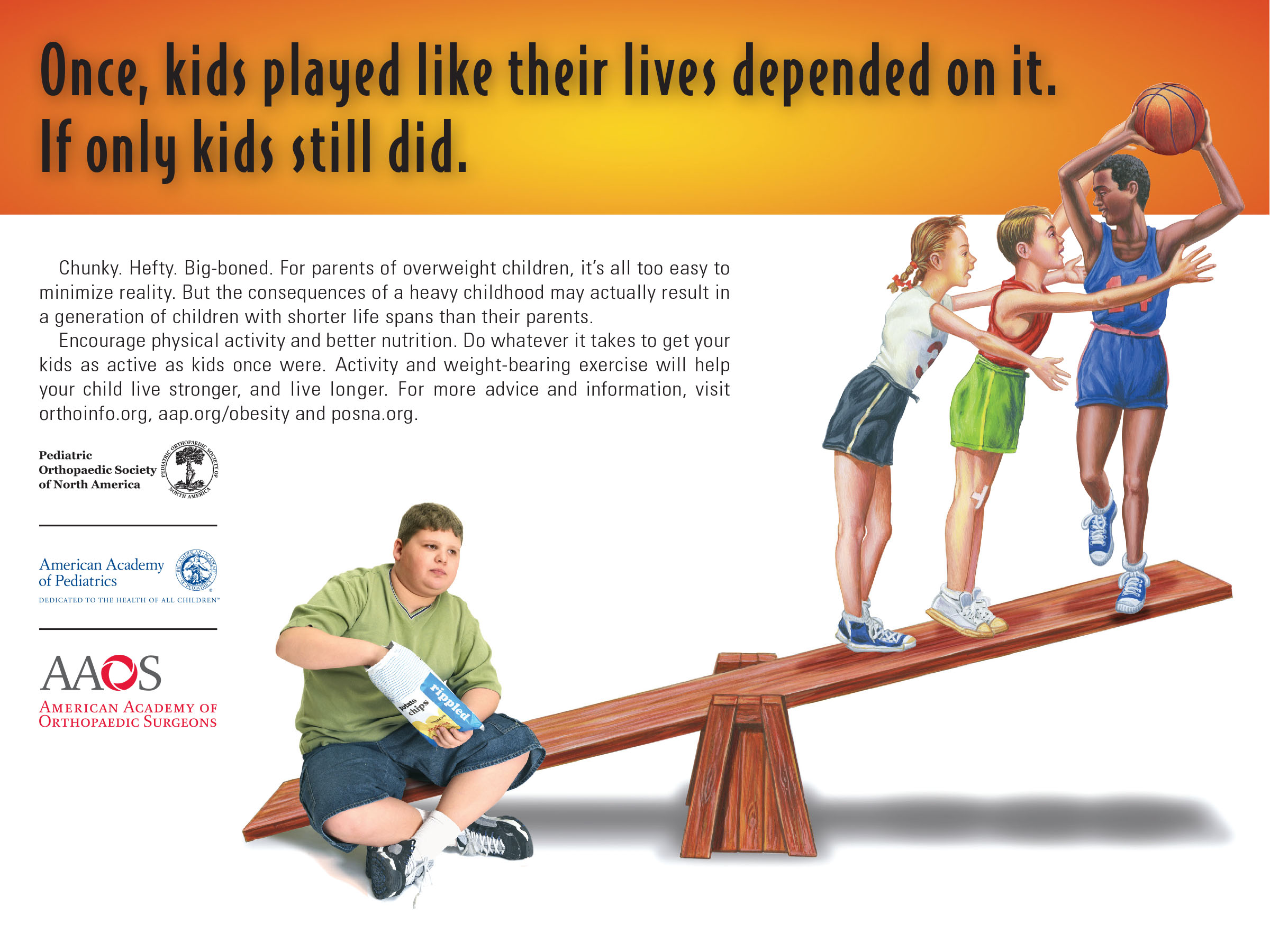
Oh my God.  Where do I even start with this monstrosity?  I was going along, minding my own business, eating my breakfast and checking out this wonderful post on Adios Barbie when I ran into this picture linked to by Allison Epstein.  And I nearly choked on my Cheerios.(R) Seriously? SERIOUSLY?  Look! It’s Fat Shaming with Dick and Jane:

See Dick and Jane and Pat.  She Dick and Jane and Pat fat shaming Tim.  See Tim.  See Tim embody negative fat stereotypes.  See Dick and Jane and Pat revel in their thin privilege.  See Tim go on a diet.  See Tim get slimmer.  See Tim get fatter.  See Tim get even fatter.  See Mom and Dad panic.  Panic parents panic!  See Tim get a gastric sleeve.  See Tim learn about dumping syndrome.  See Mom and Dad buy Tim dark colored pants.  Dump Tim dump!  Oh No!  Now Tim smells funny.  Isn’t he funny?  See Dick and Jane and Pat laugh.  See Tim want to die.  Die Tim, die…

The thing that really scares me, I mean full-out, ooga-booga, petrifies me, is that there are three organizations that have signed on to this ad.  That means at least three, purportedly professional people (and probably more) not only signed off on, but actually paid somebody to create this crap.  But that’s okay (they reason) because kids need to get out and play more, right?  And research shows, the way to get kids to go outside and play is to shame them, right? Right?

No, no, no, no, no, no, no and how about, no!

Despite the ongoing research that indicates that fat shame does not lead to permanent weight loss, and that fat stigma leads to even less healthy behaviors among kids like disordered eating, binge drinking, and more smoking, various white-coat-wearing idiots feel the need to create ads like this one.  Why?  Are they trying to create the medical equivalent of this exercise video “accidentally” catching a pooping man on camera?  (Is it an accident, or an all-new, low-bar in publicity stunts? Either way, it’s a hits bonanza!)  Do they not care that they are harming families and especially children with their stupid ads as long as they fuel parental panic and get lots of clicky poos for their hit counts?  Or have they really just not bothered to check any of the literature that shows that fat stigma harms people?  Hmmm, evil or simply, criminally irresponsible?  Hard to imagine that either are qualities I look for in a medical professional.

What is so sad, is that this ad is likely to make Tim less interested in exercise.  And this ambivalence towards exercise may last a lifetime.

But for those of you out there who are still twisting a hankie in your sweaty fingers or running around in circles yelling, “But what do we do?”  I have this advice.  If you want Tim to exercise:

1.  Create emotionally safe places for Tim to play–free from bullying or shaming.

2.  Create physically safe places for Tim to play–safe from assault and other crimes.

3.  Help Tim reconnect with and feel pride in the body he has right now.

4.  Provide safe, well-planned and excellently-executed physical education classes, and

5.  Surround Tim with role models for physical fitness that embody all shapes and sizes and abilities–like the amazing Ragen Chastain in this recent video interview from Huffington Post Live.

Seriously people.  If you want kids to exercise, give them physically and emotionally safe places to do it, give them proper instruction, provide them with great role models and teach them that exercise is something that we do because we love our bodies.

Then Dick and Jane and Pat and Tim and Sally and everybody can live happily ever after.  That is all.

Love,

The Fat Chick

P.S. Want help getting started with exercise?  My book and DVD are designed to help beginners to safely and joyfully integrate physical activities into their lives.  Enter the code DickAndJane in the discount code box to save $5 off the cover price!

Why I Love “Love Your Body Week”

joyful_elephant

I’m having such a great time presenting at Love Your Body week at Dickinson college this week!  I feel just like that joyful little baby elephant up there.  The students are enthusiastic and I too am learning a lot!

I was invited to speak for the college’s “Love Your Body Week” and I’m just one part of an amazing number of fun and meaningful activities.  I”ve been impressed with the “Love Your Body Week” theme and it’s a great tool for the college campus for a number of reasons.  Here are a few:

1.  I think it’s inclusive.  It’s not love fat people week or love think people week.  It’s not just for boys or girls.  It’s not just for athletes or artists.  It’s love your body week.  Everybody with a body is included.

2.  It’s positive.  Rather than telling us what not to do, it’s telling us what TO do.   This is the Health At Every Size (R) way, which tends to focus on positive, definitive, loving and nurturing things that you can do for yourself.  It’s hard to think of something more positive and nurturing than loving your body.

3.  It brings attention to eating disorders on college campuses.  There is a LOT of disordered eating on college campuses.  This is a serious and dangerous problem for both men and women.  Love Your Body Week brings attention to eating disorders in a very gentle way, which does not call people out or shame them for disordered eating, but rather allows everybody access to this important information.

4.  It’s joyful.  See?  Look at the baby elephant.  That’s how I feel!  We’ve talked about some very serious subjects this week.  But we also chatted, laughed, sang, played and danced together this week at Dickinson College.  An awful lot of this was fun.  And I’m hoping that fun will bring young men and women back for more year after year.

5.  It’s planting an important seed.  I am not naive or egotistical enough to believe that I can change anybody’s mind about body love, self acceptance, size acceptance or Health At Every Size with one speech.  But I can say I wish somebody told me about it back when I was a college kid.  I had to wait until age 30 to even be exposed to this idea.  Love Your Body Week allows us to plant the seed of why it’s so important to love your body at every size among young people.  Nobody knows when or if that seed will bloom.  But at least the seed has been planted.

That, my dears, is why I love “Love Your Body Week”.  Are you having a “Love Your Body Week” at your college campus or workplace?  If not, why not institute one of your own.  Let’s work together to make every week “Love Your Body Week!”

Love,

The Fat Chick

Roll Models

love_handlesIt’s hard to say whether kids today have an easier time or a harder time with the whole size acceptance thing.  On the one hand, kids have access to a much more diverse community now.  When many of us who are currently adults were children, our community was pretty small.  We were influenced by television and magazines and movies of course.  But most of our role models and experience came from a much smaller group comprised of our friends, the kids at school, our church or community group, the folks in the neighborhood and our families.  Via social media, kids nowadays have access to a much wider group of people.  There are social groups focused on size acceptance on the internet.  And some of their heroes like Adele and Lady Gaga have spoken out directly about the notion that kids can love their bodies just as they are.  Thus many kids are exposed at a much earlier age to the concept of size acceptance.

On the other hand, that social media is a double-edged sword.  Kids are constantly communicating and critiquing one another.  Mistakes can be immortalized via words, photos and videos and be part of an child’s online presence for life.  If a group of kids should decide to pick on another kid, they can do so relentlessly, 24 hours per day and 7 days per week.  They can find and follow their target even if they choose to move away.  Sometimes this cyber bullying can have disastrous consequences.

And there’s also the question of kids being sexualized at a much younger age.  Kids as young as 3 are paraded around in beauty contests.  Companies sell padded bikini tops to preteens.  Child actors and particularly singers are presented as sex objects well before the age of consent.  Kids are under more pressure than ever to conform to an extremely thin, sexually desirable, designer clad, hot number at younger and younger ages.  And yes, obesity and childhood type 2 diabetes have gone up in the past 20 years (although there is ample evidence that this is now leveling off or even decreasing).  But we also have a situation where hospitalizations for eating disorders for kids under the age of 12 is up 119%.  That’s kids UNDER 12 here folks.

So what are we to do?  How can we help?  Well one thing we can do is all go sign the petition created by Ragen Chastain and I to keep kids off the next season of The Biggest Loser.  The last thing kids need is to see other kids like themselves battered, bullied and abused on national television just because of the size of their bodies.  If you haven’t signed the petition, hop on over there and do it.  I’ll wait…

But the other thing I think we grownups can do, especially when we are grownups of size is to be good roll models for our kids.  Sure we can also be good role models.  We can choose not to disparage other people for their size and we can speak out when we see it happening.  But I’m also talking about rolls of flesh–our bumps, and love handles and folds of skin.  We can wear those body “imperfections” with pride.  We can wear tank tops.  We can choose not to speak negatively about our bodies, especially in front of kids.  By walking around, comfortable in our own skin, we send kids the message that bodies are wonderful and beautiful and diverse–and that there are lots and lots of other things we can choose to be neurotic about other than how we look in our skinny jeans.  I’m not talking about lecturing to kids.  We all know how well that goes.  I’m talking about simply modeling a level of casual comfort over the whole body thing.  Because so often while kids are busy not doing what we tell them, they are watching intently to see what we do.

So what about you?  Are there ways that you can be a roll model for today’s youth?  I’d love to hear what YOU think!


Love,

The Fat Chick

Obesity Panic: Now Available at Birth

Counting baby's fingers and toes and BMI

Counting baby’s fingers and toes and BMI

The Washington Post recently reported on a study that purports to predict which kids are most likely to become obese.  This study claims that you can use a simple formula to predict which kids are more likely to get fat over the course of their lives.  Apparently, worried parents can follow the formula (using a simple online tool) shortly after the baby’s birth to begin obsessing over the child’s potential chub before they have even brought their bundle of joy home from the hospital.

That’s just great, isn’t it?

The article goes on to suggest that doctors and parents will know shortly after birth, which kids can “benefit most” from interventions aimed at preventing them from becoming fat.  The article admits that helping people lose weight once they are heavy “has yielded disappointing results”.  So the article suggests, we might have better success in preventing kids from getting fat in the first place.

Hmmm.  Based on what, I wonder?  Is there any proof that these interventions work?  Is there any evidence in the world to indicate that kids who receive these early interventions wind up thinner or more healthy than those who don’t?  And what does it do to these kids to be singled out at such an early age?

Reading a little further in the article, I came across this little gem:

The authors note that such a formula if used in common practice could help physicians allocate health-care resources by steering those kids who most need help toward nutrition and psychological counseling. They further note, though, that their formula should not be used to stigmatize some families or to falsely reassure other families that their babies are not at risk of becoming overweight in the future.

Okay, so let me get this straight.  The formula can help doctors figure out which kids to start badgering about not getting fat (starting at birth) but reassure us that those kids and families shouldn’t feel singled out (because we tell them not to).  And God forbid you parents with kids at lower risk for obesity should relax your vigilance for even a minute.  Your kid could wind up fat anyway.  You just can’t be too careful.

GAAAAAAAAAAAAHHHHHHHHHH!

How long before we have Jenny Craig and Weight Watchers for babies?  How long until health insurance becomes more expensive for families of “high-risk” kids?  How long before parents are crunching potential BMI numbers before they even decide whether or not to have a kid?

I don’t know about you, but this sort of thing really, really scares the crud out of me.  It’s not enough that we have five and six-year-old kids with eating disorders.  Nope.  Now we’re supposed to be obsessing over the gene size and the jeans size of children before they even start solid food.

Why don’t we just make healthy foods and a safe place to play available to all kids?  How about we don’t start messing with kids innate and intuitive skills for playing and eating before they even begin to form their first words?  How about we teach all kids about Health At Every Size and give them tools for healthy, happy, expansive, joyful lives instead of teaching them to fear and hate their own bodies before they are out of diapers?

Let’s, at least for a little while, let kids be kids.

Love,

The Fat Chick