Category Archives: Uncategorized

Recursive Recrimination–Beating Yourself Up (For Beating Yourself Up)

recursionrecursion

Several decades ago, I made the decision to not let negative feelings about my body rule my life any more.  I decided to stop putting my life on hold until I reached a certain size or shape.  I decided that all the things I was waiting to do until after I had the “right” body, well I was going to do those things right away.  I have never regretted that decision.  It was a massively important turning point in my life.

However, when I decided to become The Fat Chick and make this decision extremely public, I hesitated.  Because I wasn’t perfect.  I wasn’t perfectly healthy.  I wasn’t in perfectly physically fit.  I wasn’t the ideal poster child for fat people.  And sometimes I had bad days where I didn’t feel perfectly happy about my body.  How, I asked, can I inspire others to love their bodies and love exercise again when I don’t always exercise and I sometimes frown at what I see in the mirror.

Working with a very wise coach and my super smart husband I came up with the answer.  I have it on a post-it note on the window in my office.  It reads, “The Fat Chick is not a ‘persona’, she is a person.  And people aren’t perfect.”  Getting past this little post it allowed me to finish my book and be on national television and face down another pile of hate mail and ugly comments on my YouTube videos.  It has allowed me to get on with things–even when I’m feeling far less than perfect.  And it’s allowed me to stop beating myself up for beating myself up.

Look, we all have days where we feel powerful and strong and invincible.  And then we have days where we don’t.  This is normal.  This is life.  But when we make the decision to stop hating our bodies and hating ourselves for the way our bodies look, there is a tendency to want to exchange one sort of perfectionism (the search for the perfect body) for another (the complete cessation of negative body thoughts).  I get it.  First I mourned for all the perfect things I imagined would happen in my life once I had the perfect body.

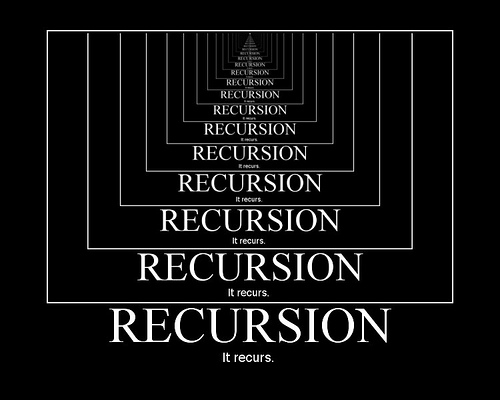
And then I had the honeymoon period where I believed I would never feel bad about my body again and I would remain perfectly healthy and nobody could ever hurt me again.  And then I had the bad days where I didn’t feel perfectly happy or healthy in my body AT ALL.  And then I started beating myself up for beating myself up about not having the perfect body in a perfect recursive storm of self-recrimination.

Sometimes I just have to STOP.  Take a few deep breaths and tell myself that I am hereby absolved of the need to be perfect in anything.  This includes being perfect at self-acceptance.  This includes being perfect about body love.  This includes being perfect about not needing to be perfect.

I take another breath and try to be grateful for the whole, non-perfect, f’ed up mess of it.  Try to be grateful that I can breathe.  Try to be grateful that I have a life to muddle through and mess up.  And try to remind myself that I don’t need to be perfectly grateful either.

I don’t always get it right.  But that’s okay.  Because I am a person, and people aren’t perfect.

I hope this little blog post helps serve as a reminder for some of you who are currently in the process of beating yourself up for, well, beating yourself up.  You have the permission of the universe to be profoundly imperfect.  Because the universe made us that way.  You are a person, and people aren’t perfect.  And that’s totally okay.

Love,

Jeanette DePatie (AKA The Fat Chick)

P.S. Want me to talk to your group about being imperfect?  Click HERE to learn about my speaking.

P.S.S. Want to buy a book or DVD to help you in your fitness journey?  Click HERE to learn about them.

Paradoxically(?!) Fatter Diabetics Live Longer

A few days ago a new study was released which indicates that of people living with type-2 diabetes, those in the overweight category live the longest.  They even live longer than those in the “healthy weight” category.  Newspaper articles like these (TRIGGER WARNING FOR UBIQUITOUS HEADLESS FATTY SHOT) are quick to cite this as another example of the “obesity paradox”.  In case you are unfamiliar with this term, the obesity paradox refers to the fact that despite the fact scientists arbitrarily chose to name a lower weight category “healthy weight” or “normal weight”, the pesky fact remains that those of a higher weight on average live longer.  And while people in the “overweight” category are more likely to contract certain diseases than those in the “healthy weight” category (such as cardiovascular disease) they are more likely to survive these diseases for a longer time.  It’s vexing.  Because, not only does this mess up the whole color scheme of the pretty BMI charts, it also means that we’ve been telling people to slim down to a weight that just might not be in their best interest.

One wonders how long the medical establishment is going to cling to this description of the “obesity paradox”, when the solution is so very simple.  Change your labels.  Change your definition of “healthy weight”.  In fact stop saying “healthy weight” altogether.  Because while certain weights have some advantages over others in some arenas, they are more dangerous than others.  For example recent research indicates that the fattest people are the least likely to suffer from dementia at an early age.

The medical establishment and world at large are unlikely to change these labels any time soon however.  The reason?  Cash.  Money.  Cabbage. Moolah.  Being able to charge over and over again for obesity treatments that don’t work is big money.  Adding the word “obesity” to your research proposal increases the chances of getting funding and increases the amount of funding you are likely to get.  Heck, as Harriet Brown’s excellent article in the Atlantic states–even mentioning the word “obesity” in a medical exam might mean you are able to collect more money for that patient.  That’s why we classify obesity as a disease, even when expert panels in the medical establishment recommended against it.

I wonder when we are going to publicly accept the real obesity paradox.  That we have a situation that occurs naturally in a certain segment of the population, that in some cases is potentially harmful and in some cases is potentially beneficial.  Yet we label it a disease and focus billions of dollars towards trying (unsuccessfully) to change it, without any evidence that changing it will in fact, make people healthier, happier or live longer.  That, to me, is the quintessential definition of a paradox.

Love,

Jeanette DePatie (AKA The Fat Chick)

Want to book me to speak at your event?  Click HERE to learn more.

PADS Saturday

Okay y’all.  I’m not gonna lie.  It was an awesome week and a tough week all rolled up in one.  So I felt that I needed to have a PADS Saturday and share it with you.  If you’re new, or missed the previous posts, PADS stands for Public Acts of Dancing Spontaneously and it  is something that never fails to make me feel better.  And this Saturday’s clip is a doozy.

So you never know what’s gonna happen in NYC.  On this particular day, Coyote of Coyote & Crow decided to perform Grateful Dead’s Version of “Me & My Uncle” at Bedford Ave. Williamsburg NYC.  The song is awesome and naturally it got some toes tappin’.  And then this little girl decided to take it to 11.

I love that she feels free to dance her little heart out.  I love that she doesn’t feel like she needs to be Beyonce or Lady Gaga.  She just boogies down in her hat and little pink coat.  And that’s my wish for all little girls everywhere.  That they can love themselves and love their bodies and live outside of self consciousness long enough to bust a move in the subway if the feeling takes them.

Here’s to lifting your heart and dancing through your day.

Love,

Jeanette DePatie (AKA The Fat Chick)

Speaking With My Sisters

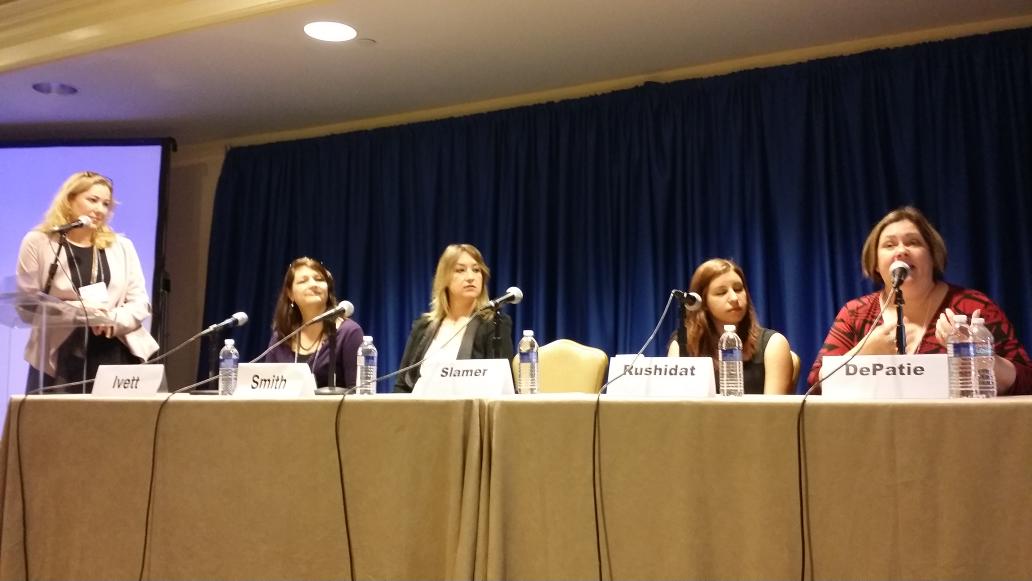
Yesterday I had the honor and privilege of speaking as a panelist at Digital Hollywood on a panel hosted by the Alliance for Women in Media.  It was a part of a track of women’s programming hosted by the Alliance along with Women In Film, Women Network, and Girls In Tech Los Angeles.  Throughout the day there were panels and screenings and networking events presented by women for women, and it was glorious.

There is nothing quite like hanging out in a room with several hundred powerful women who are following their path and living in their power.  There was a lot of discussion of lifting one another up.  We talked about the new economy approach of focusing less on competition and a whole lot more on collaboration.  We talked about our dreams and inspired one another.

The evening ended with a powerful (and wildly entertaining speech) by Michelle Patterson, President of the California Women’s Conference & Women Network.  The speech touched me in a number of ways, but one thing stood out in particular.  Michelle reminds us, that if we are to succeed, we must learn to ask for help and also learn to receive that help.  I think for many of us, this is a particularly difficult lesson.  We aren’t comfortable asking.  We think we shouldn’t need help or that we don’t deserve help.  Or we just can’t imagine how someone might help us.  But all of us need help from time to time.  And this was a really important reminder for me–that asking for help isn’t a sign of weakness.  If you are convinced you can accomplish all your dreams without help, you are either naive or simply not dreaming big enough.  Because big dreams require big, beautiful, powerful teams to accomplish them.

But throughout this day, I learned another equally important lesson.  Don’t assume you don’t have the ability to help.  I went to many panels.  And like many people around me, I rushed up to the podium afterwards to speak with the panelists with whom I resonated.  I connected with panelists that I thought might be able to help me.  And I asked for help.  I also wanted to offer help.  But initially, I was hampered by the belief that I wouldn’t be able to help.  Some of these women were CEO’s of very large companies.  Some of them were successful screen writers or famous actresses or technology mavens.  I wondered what I could possibly offer.  But then I decided to take a different tack.  I chose not to believe there was nothing for me to give and I simply asked.  What is the one problem you are trying to solve right now?  What do you need?  Can  I connect you with somebody?  How can I help?  And it was magic.  Many of the panelists were taken aback when I asked.  They stopped, and thanked me for asking.  And then they told me what they needed.  And you know what was amazing.  In many cases I WAS able to help.  I couldn’t necessarily do the things myself, but I knew somebody who could.  I gave out names and offered to make introductions.  And I felt powerful.  It was good.

So that was my lesson from yesterday.  Never assume you are not worthy of help.  Believe in your self and your passion enough to dare to simply ask for what you need.  Be direct.  You’ll be surprised how often people will give you what you ask.  And never assume you are not worthy to give help.  You never know what you have to offer someone or how you can connect with others if you don’t ask them what they need.  Even if you can’t help, asking someone what they need is a profound way to honor them.

So, I’m asking.  Right now, I particularly need to find speaking gigs.  I am working on an important speaking certification and need to get 20 more speeches in before the end of the year.  With that in mind, I’m offering a special “gotta get 20 speeches” discount.  There will never be a better time to book me to speak with your group.  Don’t assume you can’t afford me, because I gotta do 20 speeches.  Can  you book me?  Or do you know somebody who can book me?  Just send me an email at jeanette at the fat chick dot com and let me know what you’re thinking.

And I’m asking.  What do you need right now?  Can I connect you with somebody to help you with a particular thing?  What is standing in your way of reaching your goal?  How can I help?  Again, feel free to comment or send me an email.

What can I say?  Yesterday was a very good day.  And I believe today can truly be phenomenal for all of us.

Love,

Jeanette DePatie (AKA The Fat Chick)

More Victims Dying to be Thin

DeadlyScale

I recently read about this story about student Ella Parry who died after accidentally overdosing on diet pills she bought from the Internet.  The pills were found to contain Dinitrophenal or DNP.  This highly toxic industrial chemical has been determined to be unfit for human consumption.  There is no known antidote to the toxin once it is ingested.  Ella, an otherwise healthy 21 year old woman bought 100 of the slimming pills online for the equivalent of about $100.  She did ingest more pills than the label suggested.  But very shortly after taking the pills, she started to feel quite ill.  Not long afterward, Ella drove herself to the local emergency room.  Her metabolism began to soar, and despite efforts by the doctors to bring her temperature down, Ella’s body “burned her up from the inside”.

Now there is no question that people fall victim to Internet scams all the time, and it’s easy to find illicit substances online.  But it leads me to wonder if Ella is simply a victim of an Internet scam, or if there’s more at play here.  How much pressure do young people get to be very, very thin?  How much have they heard that being thin is easy and anybody can do it if they try?  What happens when they find out it is not easy for them?  What lengths will they go to in order to achieve an “acceptable body”?  I can’t help feel that this is just another casualty of our culture’s obsession with thinness, and our culture’s utter inability to educate us about natural body diversity.  This leads to many potentially fatal problems including eating disorders.  And it leads to desperation that might cause an educated, intelligent young woman to buy pills off the Internet and consume them without even understanding what is in them or how dangerous they are.

This is why the war on obesity is not just a war against fat bodies, but about all bodies.  Because fear of not having the perfect body, fear that a body could become fat one day, leads people of all sizes to make poor choices with sometimes devastating consequences in order to fit into their skinny jeans.  This is why I will continue to fight for body diversity and for better education about the real facts about bodies and weight.

If you’re interested in joining this fight, perhaps you would consider participating with us in the upcoming Fat Activism Conference.  We’ve got a call for participation HERE.  It’s a very simple form that you could fill out in just a few minutes.

And I’d like to remind you, that if you are interested in joining us in our upcoming Fit Fatties Virtual Event, there are just a few short days left to sign up.  You can learn more HERE.

Love, Jeanette DePatie (AKA The Fat Chick)

P.S. Want to hear me speak about body diversity?  Learn more HERE.

Tuesday Reviewsday–Harriet Brown’s Body of Truth

For today’s Tuesday Reviewsday, I am pleased to discuss Harriet Brown’s recently released book “Body of Truth”.  Harriet Brown is already well known for her previous book, “Brave Girl Eating” about her experiences with her daughter who suffered from Anorexia.  “Body of Truth” uncovers Harriet’s epiphany regarding her own weight obsessed life within a society who complemented her daughter’s svelte figure even when they knew she was recovering from anorexia.

Like many of us, Harriet’s weight obsession and body hatred started early in life and lasted through most of middle age.  It wasn’t until she saw the devastating effects of anorexia that she even began to question society’s readiness to conflate thinness and health and began to question her seeming moral obligation to have thin thighs.  Harriet describes her own struggle in the midst of her Jewish family and describes the dichotomy of being in a culture that loves food and values hostesses who provide abundance at the dinner table while being terrified of fat.

Throughout the book, Harriet’s journalistic roots shine through clearly.  She provides a wealth of current information and facts to back up her assertion that we as a culture are a bit off the rails when it comes to body image and weight.  Much of the ground covered here will be familiar to those of us who have studied this area for some time.  There are the statistics about the failure of dieting.  There is an in-depth discussion of the “obesity paradox”.  And she covers Flegal’s research and the ensuing shameful medical backlash.  She follows the money and describes the intense conflicts of interest displayed by so many who serve on boards and are paid to do research to support the “war on obesity”.  However, there is much recent research covered in the book, and a significant portion of the anecdotal materials (for example on Professor Miller) are new and fresh.

Above all, I feel Harriet does a terrific job of weaving her personal narrative with a tight journalistic style that presents facts and evidence in a way that makes for a fast and enjoyable read.  I really  enjoyed the book and I think it may especially resonate with middle-aged readers who are just coming to HAES at this point in their lives.  I strongly recommend this powerful and enjoyable book.

Now, before I close, on to a bit of business.  Have you heard about our new Fit Fatties Virtual Events?  Have you signed up yet?  It’s super cool and you don’t want to miss it.  This time around the events feature a quintathlon option as well as Fit Fatties Flair.  Learn more HERE!

Also, this year I am seeking to earn a new fitness certification and so I am offering special discounts off of my regular speaking fees.  To learn more, send me an email describing your speaking request to jeanette at the fat chick dot com.  Learn more about my speaking HERE!

Love,

Jeanette DePatie (AKA The Fat Chick)

Weight Stigma and Trekking Barefoot

I’ve talked before about how much meditation has helped me to live mindfully and peacefully.  Part of my practice involves meeting with a group up in the woods in the foothills.  Recently we engaged in a group walking meditation.  This meditation along some of the woodland trails is silent and very slow and deliberate.  We take a step, pause, and take another step moving through heel, sole and toe on each foot.  I had done walking meditation before, and I think it’s absolutely wonderful.  And I know from past experience that walking meditation works better barefoot.  I asked the teacher if it would be okay for me to do the meditation barefoot, and he said sure.

I was the only student in the class to do this barefoot.  And I remember spending just a moment before entering the trail wondering if I really wanted to do it.  What if I stepped on something sharp?  What if I hurt myself?  What if I ended up being miserable?

Just before I left the lodge, another student asked me if I was really sure I wanted to do it?  And I said yes and I took a chance.  And I’m so glad I did.

Yes, there were some moments when I stepped on twigs or leaves that were a little bit sharp.  My feet didn’t always feel perfectly great.  But the point is my feet FELT so very much.  The texture of the grass and soil and gravel and sand under my feet.  The temperature of the soil in the sun versus the soil in the shade.  The moisture in the grass versus the dry, sliding sand.  All of this made the walk so much better and more meaningful.  And as I walked I had a moment of clarity.  If I had allowed fear to control my actions, I would have missed so very much.  I would have protected myself and would have felt safe.  But I wouldn’t have experienced all those things through the soles of my feet.  And it made me ask myself an important question.  How am I “wearing shoes” to protect myself in my life.  How am I “wearing shoes all over” to keep from the potential of experiencing pain?

Another interesting moment came when we went back to the lodge and talked about our experience.  I mentioned my theory of “wearing shoes all over” to protect myself from the possibility of feeling pain.  And I wondered how much of life I am truly missing because of this virtual protection.  Another person in the group mentioned that they were worried for me.  And she said that that concern was distracting for her during the walk.  I also mentioned that before I started walking I was worried that other people would worry about me.  But I ultimately concluded that the other people on the walk had to be responsible for their own journey–and that concern for their journey shouldn’t prevent me from experiencing my own.

As I drove home, I thought about all I had learned and how it relates to the experience of weight stigma.  How often do we allow fear of pain–physical pain, emotional pain or spiritual pain–to prevent us from experiencing something potentially wonderful?  How often has past pain of weight stigma convinced us to avoid the whole mess, deaden our feelings and put shoes on our souls?  I think this is one of the most significant costs of weight stigma.  It robs us of what could be experienced, built and created by people who are too battered, too tired and too scared to do or dare or be all they can be.  It robs the world of the best of all of us.

That’s why I’m so excited about the Fit Fatties Forum that I run with Ragen Chastain.  We set it up, but it’s the wonderful members that make it such a wonderful place.  Nearly every day I read about somebody who found encouragement, pushed past fear and tried something new and fabulous.  Nearly every day I see how being in a group of people who truly support one another can encourage us all to bare our soles and bare our souls.

Love, Jeanette DePatie (AKA The Fat Chick)

P.S. Want to join Fit Fatties and engage in our new virtual events that encourage you to break out and try new things?  Click here.

P.S.S. Want to participate in the upcoming Fat Activism Conference which helps fight weight stigma all over the world?  Click here.

P.S.S.S.  Want to book me to speak about pushing past fear and experiencing joy?  Click here.

New Study Suggests Fat Correlated With Lower Risk For Dementia

FatBrain

Nearly 60 percent of the brain is composed of fatty acids.

Previously we heard that obesity increased your risk of dementia.  Now a new study contradicts these former findings and suggests that increased body size is correlated with a decreased risk for dementia.  I say correlated with, because no causal link has yet been found.  And we don’t want to go the way of those finger pointers who say that being fat “causes” sickness by saying being fat “prevents” sickness.  We simply don’t know that much yet.

However, this new study does seem to indicate that there is a strong correlation between low body weight and dementia in middle aged people.  The study reviewed statistics for nearly 2 Million people from the United Kingdom Clinical Practice Research Datalink (CPRD).  The CPRD data included people over 40 who had their BMI measured between 1992 and 2007.  (The median age for those measured was 55.)

The study found that compared to those of a “healthy weight” (heavy airquotes here) those who were underweight (BMI less than 20) had a 34% higher risk for dementia.  As people got fatter, their risk for dementia decreased–with the fattest people (BMI over 40) experiencing a 29 percent lower risk of dementia than those with “healthy weight”.

Cue the inevitable articles about the “obesity paradox”.  This is the title given to the fact that fat people are at lower risk for certain conditions than skinny people, despite the medical establishment’s insistence that this shouldn’t be the case.  This is the label given to the fact that overall, “overweight” people live longer than “healthy weight” people.  It really makes me wonder when they are finally going to do away with the “healthy weight” label, since in many cases, other weights are healthier than the healthy weight level.  And it also makes me wonder when they are going to stop calling something a paradox, when it clearly isn’t one.  Some weight ranges come with higher risks in some areas and lower risks in other areas.  And maybe we will come to realize that there isn’t one healthy weight, but rather a range of risks that slide around in various places on the BMI chart.

As reported by the BBC (LINK WARNING, HEADLESS FATTY PHOTOS GALORE) Alzheimer’s Society’s Dr Doug Brown said: “People should make positive lifestyle choices to keep their brains healthy by taking regular exercise, not smoking and following a healthy balanced diet.”  This seems sound HAES oriented advice to me.  Naturally, despite the fact that this study is much larger and more detailed than previous studies that claimed that obesity increased the risk for dementia, there’s a lot of head scratching and backpedaling going on.  The article is careful to point out that there is no clear causal link yet evident (hence the opening of this blog post).  If you have the sanity points to spare, you can click on that BBC link earlier in this paragraph to read things like, “Sure you’ll be less likely to get dementia if you live long enough.”  and “This is no excuse to sit on the couch and eat an extra piece of cake.”  Because somehow, no matter what the evidence shows, some medical professionals just have to get their jab in at the fatties.

I am just hopelessly naive enough to imagine a day when the “healthy weight” category is called something else.  I imagine that over time we will find more and more evidence that being fat has risks, being skinny has risks and being midsized has risks.  After all, being alive has risks, for people of all sizes.  Maybe we can finally focus on living the best, most productive, most joyful and healthiest life in the bodies we have right now.

Food for thought.

Love,

Jeanette DePatie (AKA The Fat Chick)

Paris Cracks Down on Super Skinny Models

French MPs have voted to make it illegal to put models who are too thin on the catwalk.  Modeling agencies who put models on the catwalk who are deemed too thin face significant fines (up to $75,000) and even more astonishingly up to six months in prison.

The MPs are engaging in this crackdown in an attempt to help curb anorexia and other eating disorders in France.  The fashion industry, especially in Paris, has a very important cultural effect on young women.  And there is no question that the average Paris fashion model is startlingly thin.  According to the WHO, a BMI under 18.5 is considered underweight.  18 is considered malnourished and 17 is considered severely malnourished.  The average fashion model is 5ft. 9in. and weighs in at just over 110 pounds.  This makes the average BMI in the fashion industry a 16.  The French MPs have thus far failed to determine what BMI will be considered too low for the fashion industry.

The lower house of Parliament also voted recently to mark all photos of models that have been retouched to change body size or shape and to make promotion of anorexia on the Internet.  One supposes that it is fairly easy to legislate the first of these ideas, but I admit, I’m not sure how they will enforce the latter.

While we all know that BMI is an unreliable indicator of health, nevertheless extremely low weights (along with extremely high weights) are associated with health risks.  In particular, extremely low weights are sometimes indicative of Anorexia–a serious eating disorder which has proven the most deadly of all forms of mental illness.  While one could imagine that some of these women are simply naturally very thin, it is unlikely that all or even most of them have a natural BMI that low.  And first hand accounts from many models who speak of living on diet coke and cotton balls, and who pass out at photo shoots from lack of nutrition, lead us to believe that achieving a weight this low for many models requires extreme measures.

Naturally the fashion industry is fighting back.  They state that just because their models are thin, does not mean they are anorexic.  And there is a certain amount of truth to that.  If we are going to argue for body diversity, we must accept that some people are naturally very thin, just as some people are naturally very fat. And if we ban very thin models, shouldn’t we ban very fat ones too?

Personally, I think it’s important to recognize that the Paris fashion industry is not representing body diversity on the catwalk.  The average Paris fashion model’s body size is far, FAR below the national average for BMI.  And there is virtually no representation of even averaged sized women on the catwalk.  By focusing the fashion shows on body sizes that are way below average, the modeling industry creates a “new normal”.  As people come to see a body type that is not healthy or normal for the vast majority of the population as the right and most desired one.

So what say you?  Do you think these proposed French measures go too far?  Or not far enough?  I’d love to hear from you in the comments below.

New study says weight stigma signficantly reduces Quality of Life–and water is wet.

Don’t get me wrong.  I am deeply glad that they are studying the negative effects of weight stigma.  But I am wondering when this will finally be considered obvious.  I am waiting for the moment when somebody says, “shaming fat people is bad” and the primary response is, “well, duh”.

I recently read this study which was released as an online precursor to publication in Obesity magazine.  The study seeks to understand the affect that weight stigma and discrimination on conditions like depression and overall quality of life.  As the study states:

Weight stigma is often cited as a potential mechanism leading from obesity to poorer psychological well-being [4, 5, 7, 9]. Prejudice against individuals with obesity is pervasive and rarely challenged in Western society [10]. As a result, many individuals with obesity, and particularly those with severe obesity, report being discriminated against because of their weight in their everyday lives [11, 12]. Given that weight stigma and discrimination have both been shown to have a negative impact on psychological health outcomes, including well-being [10], depression [13, 14], self-esteem and self-acceptance [13, 15], and body image dissatisfaction [13, 16], this might explain why people with obesity suffer psychologically.

You would think that this had been studied in depth before.  However, according to the introduction of the study, this hasn’t previously been explored in a lot of depth.  According to the study:

Only one study to our knowledge has tested the mediating effect of weight-related discrimination, showing a significant reduction in the association between obesity and self-acceptance after adjusting for perceived weight discrimination [15]. None have examined the role of discrimination in relation to more global indices of psychological well-being, such as quality of life or depression. The aim of the present study was therefore to investigate the extent to which perceived weight discrimination mediates associations between obesity and three markers of well-being: quality of life, life satisfaction, and depressive symptoms.

In other words, many studies have suggested that fat people experience a lesser Quality of Life (QOL) than thin people.  However, this study seeks to determine whether that reduction in Quality of Life is simply because of person’s body size or whether it is caused by the world’s reaction to their body size.  I won’t keep you hanging too long.  The study determines that 40% of the person’s reduction in QOL is from perceived discrimination.

We used mediation models with bootstrapping to test the proposition that associations between obesity and well-being are mediated by weight discrimination and found that approximately 40% of the total effect of obesity on psychological well-being could be explained by perceptions of weight discrimination.

This is I think an important distinction.  So much in the “War on Obesity” suggests that the solution is for all fat people to simply lose weight.  The study suggests that the reason fat people are depressed might be–in large part–the “War on Obesity”.  As Ragen Chastain frequently states in her blog, Dances with Fat, “The way to deal with oppression is not to remove people from the oppressed group.  The way to deal with oppression is to fight the oppression.”  And I have to wonder to what extent this 40 percent takes into account the internalized oppression experienced by people of size.

I hope that this, along with so many other studies regarding the harm caused by weight stigma will finally convince some of the folks in the Obesity War to consider the harm they are causing–the millions of lives ruined by “friendly fire” in this war that makes people sadder and sicker rather than healthier or happier.  And  I hope that those proponents of “tough love” and “the ends justify the means” will reconsider their stance.  Because in the case of weight stigma, love is indeed very tough to come by.  And when the ends are actually worse that the starts, it’s time to carefully consider some new means.

Love,

Jeanette DePatie (AKA The Fat Chick)

P.S.  Want to hear me speak about weight stigma at your school or organization?  Learn more about me here.