Tag Archives: obesity

ADA Says Not All Fat is Bad

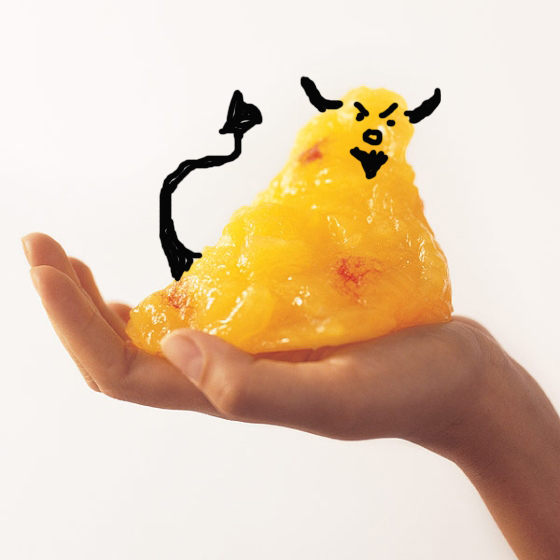
badfat

The ADA suggests that not all fat is “bad”.

Well it certainly has been a week of ups and downs.  On the one hand, we had the very disturbing news that the American Medical Association has gone against the recommendations of their own advisory committee and have declared obesity a disease.  I can’t see this as good news for anyone outside of obesity task forces and large pharma companies.  And I can’t help seeing this as anything as a black-or-white, gross, oversimplification of the issues of body diversity, and the role of fat in the body.

In the meantime, the research demonstrating the complexities of the issues surrounding fat, body diversity and obesity continues to roll out.  This very interesting article recently released by the American Diabetes Association highlights the results of some new studies conducted in both mice and humans about the role that fat plays in the body.  As always, I recommend caution when reviewing studies on mice as they don’t always directly correspond with results among humans.  However, both studies seem to suggest that fat behaves differently in the bodies of creatures that are exercising as opposed to those who are sedentary.  The study suggests that exercise changed the subcutaneous fat into higher concentrations of “brown fat” which has a different metabolic profile than “white fat”.  The study indicated that the brown fat provided better glucose tolerance and glucose sensitivities.

fatgood

The research seems to indicate that exercise can “train” fat to behave in a way that is more beneficial to the body, even without weight loss.

The upshot is that these studies lend further strength to the notion that exercise helps improve health even when weight remains the same.  The article states:

These studies suggest that even if you’re not losing weight, exercise is still training your fat to be more metabolically active; even if you don’t see the results on the scale, you are still improving your overall metabolism and therefore your health.

Does that mean you are under some sort of moral obligation to exercise?  Do you owe this to the world?  Absolutely not!  Your health is your business, and there are no moral requirements that you be healthy or do healthy things.  But if our goal, as a society, is to be healthy, maybe we should stop slapping a label on a significant portion of the human population that reads “sick” or “wrong” or “diseased”.  Maybe we should focus on making healthy behavior more accessible, more comfortable and safer for every BODY.  Yes.  Let’s do that.

Love,

The Fat Chick

P.S.  I’ll be speaking on the topic of exercise for every BODY this Friday in Chicago at the Wellness Beyond Weight event at the Doubletree by Hilton O’Hare in Chicago.  Drop by if you get the chance!  You can buy the tickets here!

Like my posts?  You’ll love my stuff!

Buy my book: The Fat Chick Works Out! (Fitness that is Fun and Feasible for Folks of All Ages, Shapes Sizes and Abilities)–available in softcover and e-book versions

Buy my DVD: The Fat Chick Works Out! (A Safe, Easy and Fun Workout for Klutzes, Wimps and Absolute Beginners!)

Buy a book or a DVD for a friend and save $5!  Just enter FRIENDBLFT in the discount code box!

Check out my Training Programs–both in person and via Skype (Starting at just $25!)

or

Book me to speak at your special event!

California Gov. Health Organization “Photoshops” Kids Picture to Fight Childhood Obesity

blog1

Good job California.  So you passed Proposition 10 to collect a fifty-cent tax on every pack of cigarettes.  You’ve used that money to create First 5 California, also known as the California Children and Families Commission which is:

dedicated to improving the lives of California’s young children and their families through a comprehensive system of education, health services, childcare, and other crucial programs.

And the commission you created with this money, chooses to use those resources to drastically retouch a picture of a little girl to make her look fat for an ad campaign designed to scare parents into limiting the amount of sugar they feed their kids.

Awesome!

Here’s the original photo, next to the retouched version:

First of all, whatever amount of state tax money that was used to do that image retouching is waaaay too much.  I could get far better design work than that done on fiverr.com for $5 USD.

Next, I have to ask, why would we spend any amount of state tax money on shaming fat parents and fat kids in the face of the fact it just doesn’t work?  In fact  study after study shows that stigmatizing and bullying kids about their weight not only fails to create thinner kids, but also tends to trigger more participation in unhealthy behaviors like smoking, drinking, substance abuse, binge eating and other forms of disordered eating.

So why exactly are we spending state tax money to create ads aimed at preventing childhood obesity that are actually more likely to increase levels of childhood obesity while at the same time encouraging our kids to engage in higher levels of destructive behavior?

I’m sure that some of the fear-mongering, hand-wringing, head-shaking folks that created this glorious ad campaign will ask you to “think about the children”.   They will cite statistics about childhood obesity and suggest that something must be done to protect the health of these poor kids.

To which I would reply, “Yes.  All kids deserve to be healthy.  So let’s focus on stuff that does that.”  Shaming kids does not make them thinner or healthier.  But there are some things we can do.  In fact, in honor of First 5, I’ll give you five suggestions:

1.  How about making sure kids have a safe place to play?

2.  How about reinstating some of the physical education programs that have been cut from schools for lack of budget?

3.  How about making sure that kids of all sizes have access to a variety of high-quality, nutritionally dense foods?

4.  How about we help fat kids learn to accept and love themselves so that they are more likely to exercise and treat themselves well?

5.  How about we add “body size” as a category for school anti-bullying programs.

Sure, these programs would be more difficult than cranking out a basic bus shelter advertisement.  And undoubtedly some of these programs would cost more than hiring the world’s worst graphic designer to “fatten up” the image of an innocent kid.  But given the fact that some of these programs might, I don’t know, help some kids live healthier lives, maybe we should just fund those instead.

As a final note, the folks at First  5 may find themselves facing some pretty well-organized and powerful opposition.  It’s already started in the form of an awesome homemade protest flyer at the site of one of the bus shelters:

Blog2But as some folks in Georgia found out, folks can get pretty riled up and do some pretty amazing things when you shame and frighten their children.

So maybe we should take a step back and a deep breath and try again.  I’m sure, upon some calm reflection, we can find better ways to promote good health for children of all sizes.

Love,

The Fat Chick


Like my posts?  You’ll love my stuff!

Buy my book: The Fat Chick Works Out! (Fitness that is Fun and Feasible for Folks of All Ages, Shapes Sizes and Abilities)–available in softcover and e-book versions

Buy my DVD: The Fat Chick Works Out! (A Safe, Easy and Fun Workout for Klutzes, Wimps and Absolute Beginners!)

Buy a book or a DVD for a friend and save $5!  Just enter FRIENDBLFT in the discount code box!

Check out my Training Programs–both in person and via Skype (Starting at just $25!)

or

Book me to speak at your special event!

Weight Loss Surgery, Colon Cancer and Some Other Considerations

il_570xN.413928071_mrub

Recently I read about a new study that links increased risk for colon cancer with weight loss surgery.  I thought it was important to share this information with you, because it seems to me that information about the possible negative side effects of weight loss surgery is so often buried in the general media.  And I think the positive effects of weight loss surgery are often blown out of proportion in the media as well.

That’s not to say that I have any interest in telling you what to do with your body.  It’s YOURS.  You should do whatever you think is best.  However, with over 100,000 weight loss surgeries performed in the US annually, I know that weight loss surgery is big business, and therefore, there are large financial incentives for certain companies to suppress information about the potential unfortunate side effects from these surgeries.  So I’d like to provide a few links to some of information about weight loss surgery that is not supported by those who profit from it.  And hopefully I can help “balance the scales” a little bit.

To be clear, one of the potential side effects of this surgery is death.  To be sure, there is a risk of death from any surgery.  But there is growing concern that the risks of weight loss surgery are often underplayed and that the evidence often cited concerning the potential upside to weight loss surgery (including savings in medical costs and lives) is deeply flawed.  It is also really important to understand that weight loss surgery is not a miracle cure, and it isn’t always the patient’s fault when things go wrong.  It seems that weight loss surgery is often treated like other weight loss techniques in that success is usually attributed to the surgery and failure is usually blamed on the patient.  Thus many who have negative experiences with weight loss surgery are often shamed and ridiculed and even asked to leave public forums where they might share their stories.  That’s why I think it’s important to share this link to a site dedicated to those who wish to share their stories about complications arising from weight loss surgery.  I think people who are considering weight loss surgery are provided with plenty of links to people often still experiencing the “honeymoon glow” of the initial weight loss.  But I think if you are considering this important life-changing step, you should also have access to a few of the heartbreaking stories of those who have not had such a wonderful experience.

To reiterate.  I am not telling you that you should or should not have weight loss surgery.  It is your body and your decision.  Clearly some people feel that the surgery has had a positive effect in their life and there are plenty of places where you can read about that.  I know people who have had the surgery and are glad they did.  But I have also known and cared for people who have died from these procedures.  I know people who have had these procedures and didn’t feel they were told the truth about what to expect.  I know people who felt that the potential downside was significantly underplayed and wish that they were given more balanced information before they had the surgery.  I simply wish to provide a few links that will hopefully help provide that balance.

Love,

The Fat Chick

Ellen and the Biggest Bully

I love the Ellen show.  I love the sweet, silly nature of it.  I  love the dance breaks.  I love Ellen’s work to end bullying.  So I was so very sad when one of my readers gave me a heads up that Jillian Michaels was going to be interviewed on the Ellen show.  Sure enough, the show aired yesterday, and I am so very disappointed.  I am so sad that Ellen had professional bully Jillian Michaels on her show for a super soft interview.  First, she let Jillian go on and on about how she’s helping people with The Biggest Loser.  Please. Who exactly is Jillian helping with that show? Scientific studies have been conducted.  One of those studies indicates that people are less likely to exercise after watching The Biggest Loser.  So the show discourages exercise.  What about weight loss?  According to Yoni Freedhoff in his excellent article “When Science Met the Biggest Loser” even former contestants of the show are unlikely to keep the weight off.  There are a few, who have since made their body size into a career with lucrative speaking engagements and product endorsements who manage to stay thin.  A group of researchers including the show’s own Robert Huizenga have determined that those participating in shows like The Biggest Loser face an extremely significant metabolic slowdown after their weight loss, making it very difficulty and extremely unlikely that participants will maintain their weight loss.  Another study cited in Freedhoff’s excellent article indicates that people who watched even a single episode of The Biggest Loser led viewers to “dramatically increase their own hateful and negative biases towards those with obesity”.

So who is Jillian helping?  She’s making millions of dollars participating in a show that increases stigma against people of size, makes people less likely to exercise and espouses a weight loss method almost guaranteed to leave participants even larger in the long run.

Next, Jillian went on to complain that her role on the show is taken out of context and that people see her as a “cartoon caricature”.  Yet, in this same episode of Ellen, Jillian participates in a segment where she “yells at Ellen” and is in turn yelled at by Sean Hays for not, yelling at Ellen well enough.  The clip concludes with Ellen and Sean making sure Jillian is gone and then stuffing popcorn and donuts into their face as quickly as they can.  So if Jillian  worried about her image as the woman who yells at people a lot, she sure has a funny way of dispelling that image.  I think it important to mention the one thing in this clip that is accurate.  There are studies that indicate that shaming and bullying people is more likely to produce binge eating and other negative health habits than to encourage healthy habits.  So score one for accuracy there.  But I don’t think Jillian is misunderstood.  She is a professional bully.  She makes her living by finding new ways to humiliate and shame fat people.  She makes MILLIONS of dollars at it.  Misunderstood?  I think she’s understood only too well.  If by chance there is some shred of decency in her, if she really doesn’t believe in behaving like a cartoon villain, guess what?  All she had to do was walk away from the show and not come back.  All she had to do was turn down those big fat paychecks.  She didn’t.  She may use that “I’m helping people” line to make herself feel better, but she isn’t making people feel better.  She isn’t making people healthier.  What she’s making is money and LOTS of it.  What’s not to understand?

Then Jillian went on to a section where she busted some exercise myths.  Please.  As if Jillian Michaels is somebody we should trust to fill us in on health and fitness.  The Biggest Loser is one of the greatest perpetrators of exercise myths on the planet.  As I pointed out in two previous posts, just about everything they do on The Biggest Loser goes against solid exercise science.  And as was stated previously in this post, science indicates that The Biggest Loser does more harm than good.  Either Jillian is in agreement with what happens on The Biggest Loser which demonstrates poor analytical skills, or she’s in disagreement with what happens on The Biggest Loser and participates merely to make a buck.  Either way, this is not a person I’m going to turn to for solid advice about health and fitness.

I can’t say I’m disappointed in Jillian.  She delivered exactly the kind of nonsense I thought she would.  But I am disappointed that Ellen caved to whatever pressure was brought to bear and allowed someone like Jillian Michaels on her show.  I’m so sad that Ellen offered yet another media platform to a person who makes her living hurting and humiliating fat people.

By the way, the petition to keep kids off The Biggest Loser is still live.  If you haven’t signed yet, you still can.  Why not do it Right Now?

Love,

The Fat Chick

Thursday Theater: Even Monkeys Understand Fairness

This video is wonderful for a few reasons. In the first place it is really funny. And in the second place, it reminds us that even monkeys understand about fairness.  When monkeys do equal work, monkeys expect equal pay.

Yet, in the world of humans, we have an ever growing disparity in worker pay. At my last full-time job, I was discouraged to learn that my immediate supervisor was earning nearly ten times my pay. And I was also earning less than half as much as the male producer in the office next door. Granted, my supervisor was higher on the totem pole than me, but ten TIMES higher? I don’t think so. And I have to admit, when I found out that others doing the same job as me were getting paid twice as much, well I started lobbing more than cucumbers out of my cage.

This is why I get so boiling mad when I see that fat people on average earn less than their thinner counterparts. Even when the fat person is performing the job as well or better than their thinner counterparts, the bigger person typically brings home a smaller paycheck. According to The National Longitudinal Survey of Youth, in 2004 obese men earned $4,772 less than thin men, and obese women earned an astonishing $8,666 less than thin women. That’s a lot of grapes, my friends.

This is one of the reasons I think it is so important to be aware of and fight against size discrimination. We’re talking not only about somebody calling us names and making mooing sounds when we are trying to work out in the gym.  (Although those things are truly horrible as well.) but also about our ability to make a living. $8,000 can easily mean the difference between being above or below the poverty line. $8,000 can pay for better health care or a college class or special job training. $8,000 could pay for a used car to get us to a better job.

Let’s continue to fight for the rights of people of all sizes to receive a fair wage. Let’s share the message far and wide that equal pay for equal work is just common sense. It’s a pretty simple idea. Heck, even a monkey can grasp it.

Love,
The Fat Chick

The Energy Balance: Simple Arithmetic or Differential Calculus?

One thing that makes me crazy as a fat person is people spouting the old energy balance equation at me.  They say, if you’re fat, the reason is simple.  You eat too much and you exercise too little.  They suggest that body mass is a simple equation that looks like this:

food=exercise means stasis

food>exercise means fat

and food<exercise means thin

They suggest that it is “simple arithmetic”.  Seems logical right?  And blessedly simple?  All I have to do is exercise more and eat less and I will be thin, right?  Except in the real world, things are rarely, if ever that simple.  But if you’re thin and enjoy all the societal benefits that come with being thin, like being considered healthy, righteous and disciplined by most of your peers, you want to believe this math don’t you?  Because believing that the benefits you derive are completely under your control and that anyone can have them, allows you to feel the maximum of A) control over your environment and B) self righteousness about your situation.

I think there is some similar math going on out there about the question of wealth.  If you are a wealthy person or even a reasonably well off person, there’s a tendency to believe in an “energy balance” when it comes to money as well.  It looks sort of like this:

spending=hard work means stasis

spending<hard work means rich

spending>hard work means poor

But when we look at these equations, we start to wonder.  What about people who didn’t have parents who saved for them to go to college?  What about people who are born rich?  What about people who face prejudice because they are the “wrong” height or the “wrong” color or they speak the “wrong” language, and find it difficult to find a job?  We all know people who work very, very hard and are really, really not well off at all.  Maybe this whole energy/wealth balance arithmetic has some problems.  Maybe it’s just not that simple.

The real story about energy balance and whether or not we are fat is a lot more complex.  Just take a gander at this amazing chart that documents many of the things that can influence our weight.  There’s so much stuff on this chart, I can’t even see it all on one page.  On my laptop, I have to scroll all around to see it.  And there are new factors that influence body fat being discovered all the time–from fat genes, to fat hormones, to compounds in plastic containers to environmental pollutants to more and more complex drug interactions.  Looking at this chart, one might start to think that whether or not we are fat seems far beyond simple arithmetic.  With all of these factors swirling around, maybe it’s a little more like differential calculus.

As a society we desperately want to believe that being thin is simple.  Because simple problems cost less to solve.  Simple allows us to maintain the illusion of complete control.  And I think we desperately want to cling to the illusion of control because we are mortal beings.  We want to believe that we can control our health because we want to believe that if we follow a few simple rules, we can control whether or not we get sick and when we will die.  We want to believe that if we work hard, we will be rich.  Because it seems almost unbearably unfair that some people will work very hard for their whole lives and not have enough to eat while other people will be born to a large amount of money and will never need to work a day in their lives.  We don’t want to face the fact that some of us who have a lot of money were at least in part, incredibly lucky. And we don’t want to believe that some of us who don’t have much money at all, never will, no matter how hard we work.  And we want to believe that if we just ate a little less and exercised a little more, we would be thin, thin, thin.

The illusion of control and desire for simplification is, in many ways, hard wired into our societal systems.  But we can overcome this programming if we desire it.  We can choose to dial down the self righteousness and dial up the empathy and understanding.  We can choose to resist the urge to oversimplify our privilege in a way that makes us feel better about ourselves.  We can take on the challenge of doing the hard math problems that contain a lot more variables.  And if our situation challenges the “simple arithmetic” view of the world, we can choose not to buy into the rhetoric privileged people use to feel better about themselves.  We can embrace all of life with all of its complexity and richness.  Because true health and happiness rarely boil down to simple arithmetic.

Love,

The Fat Chick